Pediatric and Development · 8 min read
Supernumerary Teeth: When You Grow More Than the Standard Set
- Written by
- 1PleasantonDentist Editorial Team, Editorial team
- Reviewed by
- Editorial team
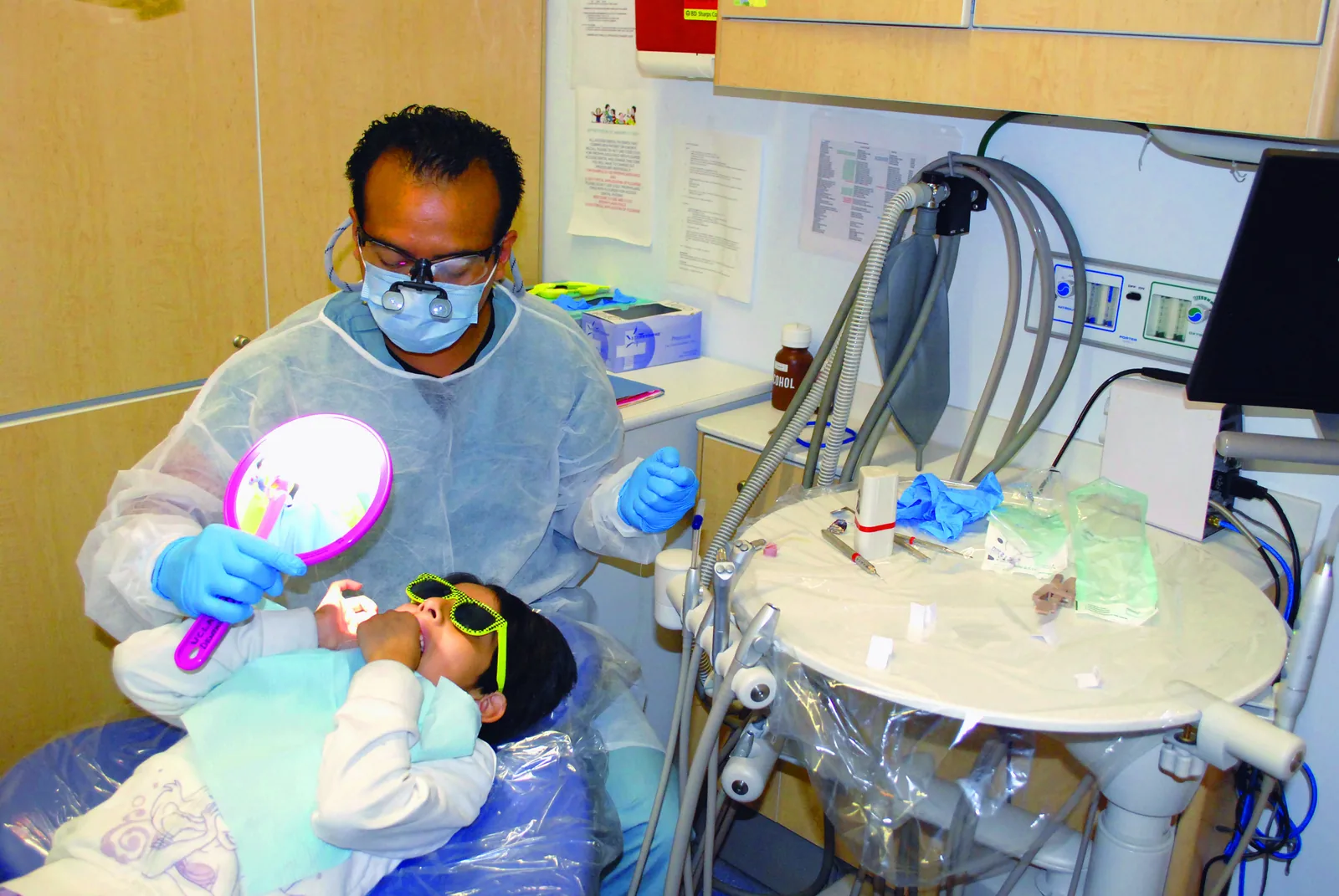
Image: UCLA School of Dentistry · BY 3.0 · Source
An extra tooth, most commonly between the upper front teeth, is a real developmental variation with its own specific management approach.
What Are Supernumerary Teeth?
Supernumerary teeth are extra teeth that develop beyond the normal complement, which can occur in either the primary (baby) or permanent dentition, varying widely in size, shape, and location.
What Is a Mesiodens Specifically?
A mesiodens is the most common type of supernumerary tooth, located between the two upper front central incisors, often small and cone-shaped, and sometimes never fully emerging through the gum on its own.
Why Do Supernumerary Teeth Develop?
The exact cause isn't always clear, though genetic factors play a documented role, and supernumerary teeth are also associated with certain syndromes, though many cases occur as an isolated finding without any broader associated condition.
Do Supernumerary Teeth Always Cause Problems?
Not always — some remain unerupted and asymptomatic, discovered incidentally on a routine X-ray, while others can interfere with the normal eruption or alignment of adjacent permanent teeth, crowding, or, in some cases, cause cyst formation.
How Is a Supernumerary Tooth Diagnosed?
This is typically identified through a routine dental X-ray, sometimes before the tooth has even attempted to erupt, allowing your dentist to plan appropriate management before it causes any noticeable problem.
Does a Supernumerary Tooth Always Need to Be Removed?
Not automatically — this depends on whether it's causing or is likely to cause a problem, such as blocking a permanent tooth's normal eruption, and an unerupted, asymptomatic supernumerary tooth not causing any issue might simply be monitored rather than extracted.
When Is Extraction Recommended?
If the extra tooth is interfering with the eruption or position of a nearby permanent tooth, contributing to crowding, or associated with a developing cyst, extraction is generally recommended, often timed carefully to support proper eruption of the affected normal tooth.
Can a Mesiodens Affect How the Front Teeth Come In?
Yes, this is one of the more commonly discussed effects — a mesiodens can delay eruption of the upper front permanent teeth, cause them to erupt in an abnormal position, or contribute to a gap between them, making early identification and appropriate management genuinely relevant to normal front tooth alignment.
Is Removing a Supernumerary Tooth a Complicated Procedure?
This depends on the tooth's specific position, particularly whether it's fully erupted, partially erupted, or entirely unerupted and embedded in bone, with more deeply positioned teeth requiring a more involved surgical approach than a straightforward, accessible extraction.
Can Supernumerary Teeth Occur More Than Once in the Same Person?
Yes, some individuals have more than one supernumerary tooth, and certain genetic syndromes are specifically associated with multiple supernumerary teeth, which is part of why your dentist considers your broader clinical picture when evaluating this finding.
Should Children Be Screened for Supernumerary Teeth?
Routine dental X-rays taken as part of standard pediatric dental care often identify supernumerary teeth incidentally, which is one of the practical reasons regular imaging, as recommended by your pediatric dentist, matters even without any specific symptom prompting concern.