Cosmetic Dentistry · 8 min read
At-Home vs. Professional Teeth Whitening: An Honest Comparison
- Written by
- 1PleasantonDentist Editorial Team, Editorial team
- Reviewed by
- Editorial team
Image: Teethguru · BY-SA 3.0 · Source
Drugstore strips versus a dentist's chair — here's a real comparison of results, cost, and safety between at-home and professional whitening.
What Counts as "At-Home" Whitening?
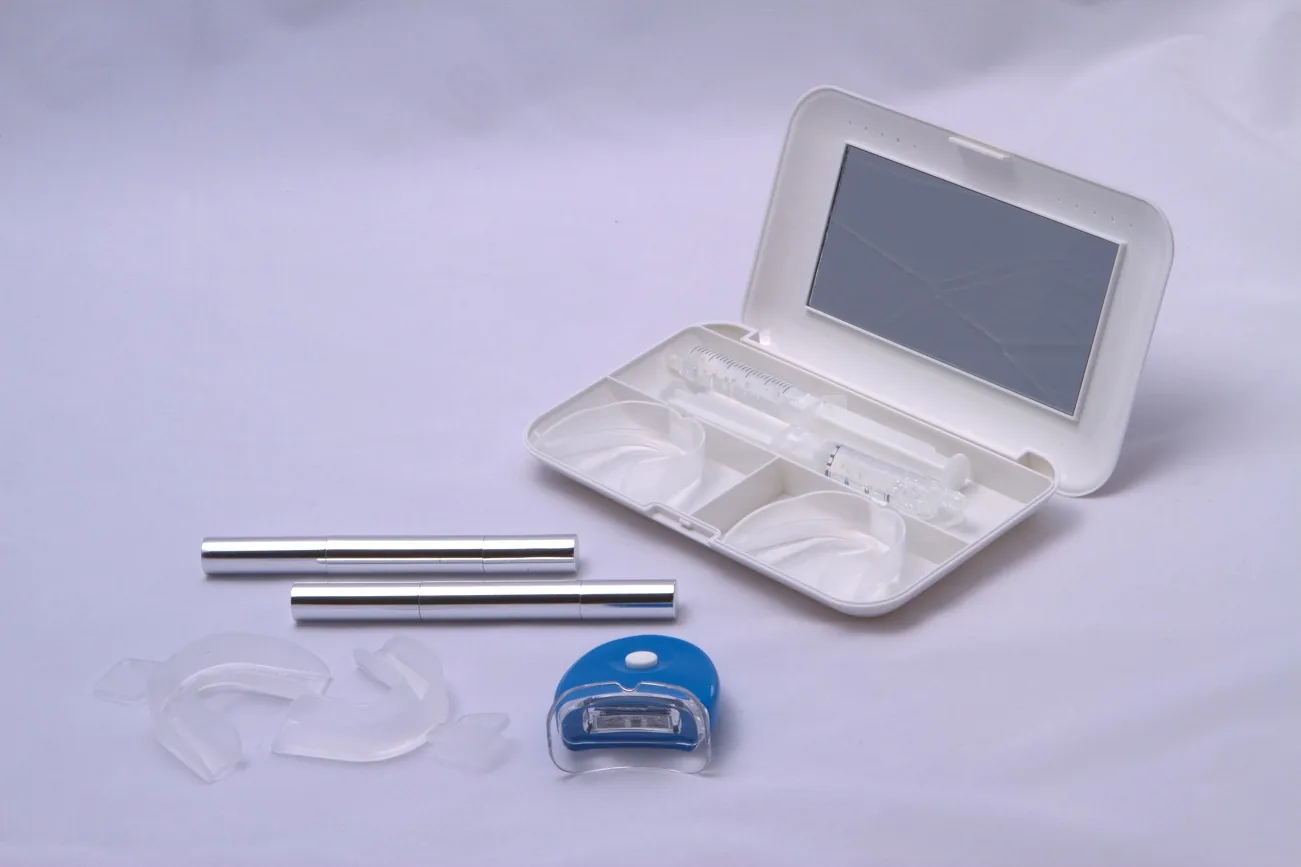
This covers over-the-counter strips, trays, and gels purchased without a dentist visit, as well as dentist-prescribed take-home kits using custom trays and professional-strength gel, which you apply yourself at home following your dentist's instructions.
What Counts as "Professional" Whitening?
This generally refers to in-office treatment performed by a dentist, using a higher-concentration whitening agent applied and monitored directly in a single, often hour-long appointment.
Speed of Results
In-office professional whitening delivers visible results immediately, within a single appointment. At-home options, whether over-the-counter or dentist-prescribed, generally require days to a couple of weeks of consistent use to reach a comparable level of change.
Concentration Differences
Professional in-office treatments use the highest concentration of whitening agent among common options. Dentist-prescribed take-home kits use a somewhat lower concentration, designed for repeated use over time. Over-the-counter products use the lowest concentration, reflecting the need for safety in unsupervised home use.
Custom Fit vs. Generic Fit
Dentist-prescribed take-home kits use trays custom-molded to your specific teeth, allowing more even, consistent contact with the whitening gel. Over-the-counter strips and generic trays aren't customized to your mouth, which can lead to less even results and, in some cases, more gel contact with gum tissue than a custom-fitted option.
Cost Comparison
Over-the-counter products are the least expensive option by a meaningful margin. Dentist-prescribed take-home kits cost more, reflecting the custom trays and professional-strength gel. In-office professional treatment is generally the most expensive single option, reflecting the concentrated materials and direct chair time with a provider.
Safety and Supervision
Professional whitening, whether in-office or dentist-prescribed take-home, involves direct oversight from someone trained to assess your teeth and gums beforehand and manage the process appropriately. Over-the-counter products rely entirely on you following package instructions without professional evaluation of whether your specific teeth are well suited to the product.
Which Option Handles Existing Dental Work Better?
A dentist evaluating your mouth before recommending a whitening approach can account for existing crowns, veneers, or fillings on visible teeth, which won't change color and could create a mismatch after whitening. Over-the-counter products don't come with this kind of personalized guidance, leaving you to figure this consideration out on your own.
Results Longevity Comparison
Professional treatments, particularly in-office options, often produce longer-lasting results due to the higher concentration achieving a deeper initial whitening effect, though maintenance habits like diet and smoking affect longevity regardless of which method you originally used.
Which Option Makes Sense for Milder Staining?
For relatively mild, surface-level staining, over-the-counter products can achieve a genuinely noticeable improvement at a much lower cost, making professional treatment less necessary purely for cost-effectiveness in milder cases.
Which Option Makes Sense for Significant Staining or a Big Event?
For more significant discoloration or if you want dramatic, reliable results before a specific event, professional treatment, particularly in-office, offers more predictable, faster results than hoping an over-the-counter product achieves a comparable change in time.