General / Other · 8 min read
Hypercementosis: When a Tooth Root Grows an Extra Layer Over Time
- Written by
- 1PleasantonDentist Editorial Team, Editorial team
- Reviewed by
- Editorial team
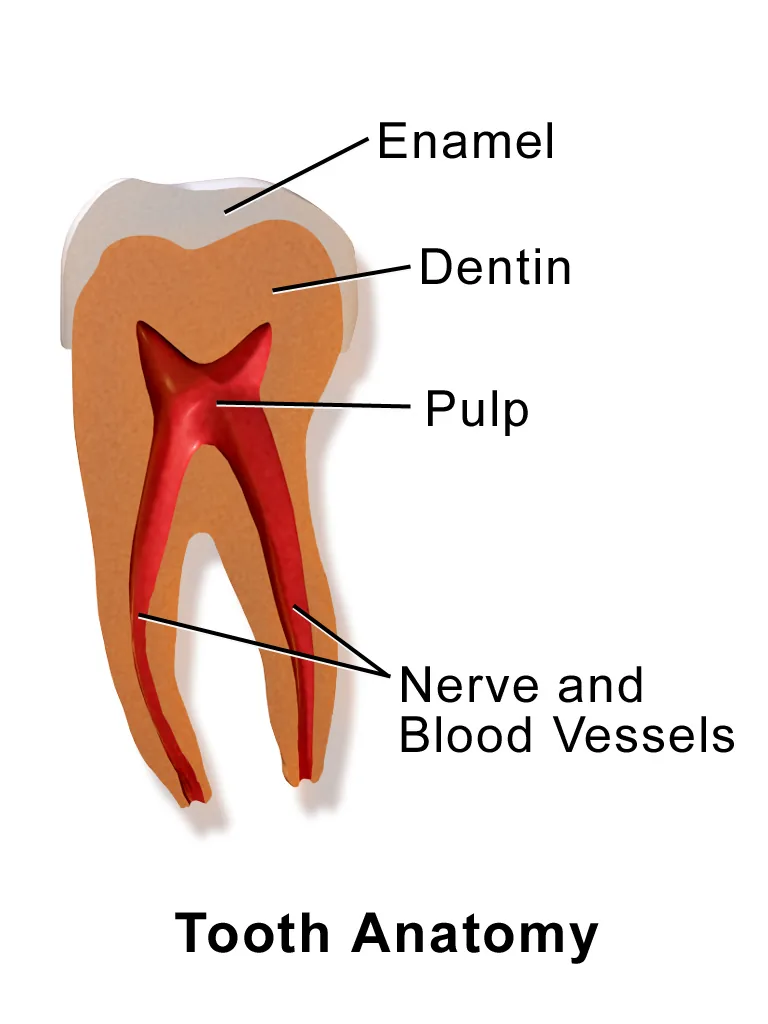
Image: BruceBlaus · BY-SA 4.0 · Source
This gradual buildup of extra cementum on a tooth root is usually harmless but becomes genuinely relevant if that specific tooth ever needs extraction.
What Is Hypercementosis?
Hypercementosis is an excessive buildup of cementum on the root surface of one or more teeth, resulting in a root that's noticeably thicker or bulkier than the typical, normal root shape.
Why Does This Extra Cementum Build Up?
The exact cause varies and isn't always clear in a given case, though it's been associated with chronic low-grade inflammation similar in concept to what drives condensing osteitis, certain conditions affecting bone metabolism, and in some cases, simply as an age-related change without any other clearly identifiable specific cause.
Does Hypercementosis Cause Symptoms?
Generally, no — this is typically an asymptomatic finding, discovered incidentally on a routine dental X-ray, without the affected tooth causing any noticeable problem related specifically to this root change.
How Is Hypercementosis Diagnosed?
This is identified through a dental X-ray, showing a visibly thickened, bulbous root shape compared to the tooth's expected normal anatomy.
Does Hypercementosis Affect the Tooth's Function?
No, typically the tooth continues to function entirely normally for biting and chewing, since this change affects only the root's thickness rather than the tooth's position or the way it interacts with opposing teeth.
Why Does Hypercementosis Matter If It Doesn't Cause Symptoms?
The primary practical relevance is for any future extraction of the affected tooth — the thickened, sometimes irregularly shaped root can make a straightforward extraction more difficult, sometimes requiring a more involved surgical approach than would be needed for a tooth with typical root anatomy.
Can Hypercementosis Make Wisdom Tooth Extraction More Complicated?
Yes, if a wisdom tooth or any other tooth being extracted has developed this thickened root, your oral surgeon needs to account for this specific anatomy during surgical planning, sometimes requiring a modified technique to safely remove the tooth without complications.
Is Hypercementosis the Same as Ankylosis?
No, though they can sometimes be discussed together — ankylosis refers to a tooth root becoming directly fused to the surrounding jawbone, which is a related but distinct concern that can also complicate extraction, while hypercementosis specifically refers to the excess cementum buildup itself, though the two can sometimes occur together in the same tooth.
Does Hypercementosis Require Any Specific Treatment on Its Own?
No, since it's not a disease process or health concern, there's no treatment needed for the finding itself, and it's simply relevant background information your dentist keeps in mind for any future dental treatment planning involving that specific tooth.
Is Hypercementosis Associated With Any Broader Health Conditions?
In some cases, certain broader conditions affecting bone metabolism have been associated with more widespread hypercementosis affecting multiple teeth, though isolated hypercementosis affecting just one or a couple of teeth, without any broader associated condition, is also common and doesn't necessarily suggest anything beyond a localized, individual variation.
Should You Ask Your Dentist If a Specific Tooth Has This Finding, Particularly Before a Planned Extraction?
Yes, if you're facing an upcoming extraction, asking whether your imaging shows anything unusual about the root anatomy, including hypercementosis, helps you understand what to expect regarding the complexity of your specific procedure.