Dental Implants · 8 min read
All-on-4 Dental Implants: How It Works, Who Qualifies, and the Real Risks
- Written by
- 1PleasantonDentist Editorial Team, Editorial team
- Reviewed by
- Editorial team
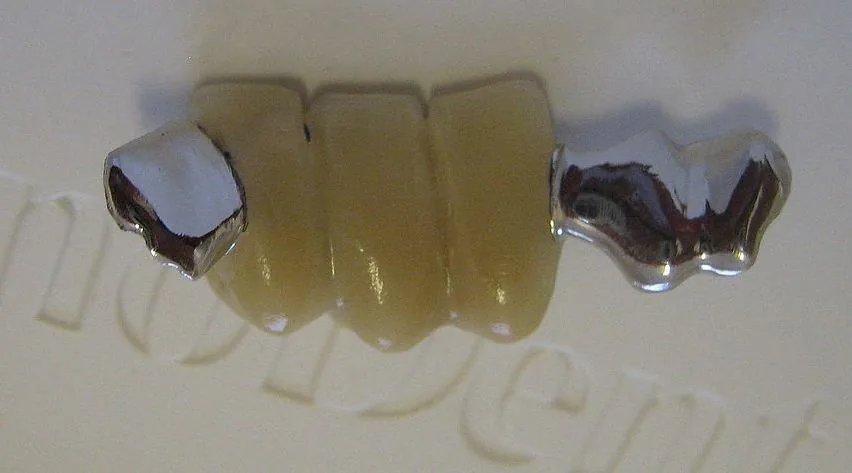
Image: Richard Avery · BY-SA 3.0 · Source
All-on-4 promises a full new smile with just four implants and no bone graft. Here's what that actually means, who really qualifies, and what can go wrong.
What Is the All-on-4 Treatment Concept?
### How All-on-4 Implants Work
The core idea is deceptively simple: instead of placing six, eight, or more implants across an arch, four implants are used, with the two in front placed straight up and down, and the two in back angled — often somewhere around 30 to 45 degrees — toward the front of the mouth. This angling accomplishes two things. First, it lets those back implants anchor into bone that's typically thicker and more stable, even in patients whose jawbone has thinned in other areas. Second, it allows a full arch of teeth to be supported by implants that are spread wide enough to distribute chewing force effectively, without needing extra implants crammed into areas where bone may be thin or where a bone graft would otherwise be required first.
Once the four implants are placed, a full arch of fixed replacement teeth — designed to look and function like a natural set of teeth — is attached to them. In many cases, a temporary version of this bridge is attached the same day as the implant surgery, which is where the "teeth in a day" idea comes from.
### All-on-4 vs. All-on-6 and Other Full-Arch Options
All-on-4 isn't the only version of this concept. All-on-6, as the name suggests, uses six implants instead of four, which can offer additional support and may be recommended for patients with certain bone conditions, higher bite force, or specific anatomical considerations. Neither approach is universally "better" — the right choice depends on your bone quality, your bite, and your surgeon's clinical judgment after reviewing your imaging. Other full-arch approaches exist as well, sometimes using more implants placed without the angled technique, generally requiring more bone volume to begin with. The specific number and placement pattern is a clinical decision, not a menu item you pick based on preference alone.
Signs and Symptoms That May Point to All-on-4
People typically start looking into All-on-4 when they're dealing with several missing or badly failing teeth across an arch, when they're unhappy with a loose or uncomfortable traditional denture, or when they're facing the prospect of losing most of their remaining teeth to advanced gum disease or decay. It's rarely the first thing someone considers for one or two missing teeth — this is specifically a full-arch solution, meant for situations where most or all of the teeth in the upper or lower jaw need to be replaced at once.
Am I a Candidate for All-on-4?
### Bone Density and Oral Health Requirements
Because All-on-4 was specifically designed to work with less bone volume than older full-arch techniques, some patients with noticeable bone loss are still reasonable candidates, which surprises people who assumed thin bone automatically ruled them out. That said, there's a limit — if bone loss is severe enough, even the angled implant approach may not have enough stable bone to anchor into, and a bone graft or a different treatment plan may still be recommended. Active, untreated gum disease is generally addressed before or alongside implant treatment, since a healthy gum environment matters for long-term implant success.
### Medical and Lifestyle Factors
Smoking is one of the most consistently discussed risk factors in this space, since it reduces blood flow to the gums and bone and is associated with a higher risk of implant complications and failure. Uncontrolled diabetes can also slow healing and raise infection risk. Certain medications that affect bone, and a history of radiation to the jaw, are additional factors your surgical team will want to review carefully. None of these automatically disqualify someone, but they're exactly the kind of details a thorough consultation and imaging review are meant to catch before surgery, not after.
### Who Is Generally Not a Candidate
Patients with extremely limited bone volume even in the areas All-on-4 is designed to use, uncontrolled systemic health conditions that make surgery unsafe, or an unwillingness or inability to commit to the aftercare and hygiene routine implants require are generally not straightforward candidates for this specific approach. In these situations, a different treatment plan — sometimes involving bone grafting first, sometimes a different full-arch technique entirely — may be recommended instead.
How the All-on-4 Procedure Works
### The Same-Day Surgery and Temporary Bridge
For many patients, the four implants are placed during a single surgical appointment, and a temporary fixed bridge is attached that same day, meaning you leave the appointment with a full set of teeth rather than a visible gap. This temporary bridge is intentionally designed to be lighter and less subject to full biting force than the final version, since the implants are still healing underneath and aren't yet ready for the full stress of normal chewing.
### Healing and Recovery Timeline
The implants need time to fuse with the jawbone before they're ready to support the final, permanent restoration. This healing period is generally described in terms of months rather than weeks, and the exact timeline depends on individual healing, bone quality, and whether both arches were treated at once or one at a time. During this period, patients are typically advised to stick to a softer diet to avoid putting excessive stress on the temporary bridge and the healing implants underneath it.
### The Final Permanent Restoration
Once healing is confirmed, the temporary bridge is replaced with the final, more durable version, custom-made to match the fit and appearance your dentist has planned for you. This final restoration is generally designed to handle normal biting and chewing force and is intended to be a long-term, fixed solution rather than something removed nightly like a denture.
Benefits of All-on-4 Dental Implants
The most commonly cited benefit is replacing an entire arch of failing or missing teeth using just four implants, rather than the higher number some other techniques require, which can mean less surgery overall. Many patients also value the potential to avoid bone grafting, since the angled implant placement is specifically designed to work with existing bone in a way that reduces — though doesn't eliminate — the need for grafting beforehand. The same-day temporary teeth mean patients generally aren't left without visible teeth during the healing process. And because the final restoration is fixed rather than removable, it functions much more like natural teeth for eating and speaking than a traditional denture does.
Risks and Potential Complications
This is the section a lot of promotional material glosses over, so let's be direct about it. All-on-4, like any surgical procedure, carries real risks, and being aware of them upfront makes for a much more informed decision.
Implant failure can occur if the bone doesn't properly fuse to the implants, or if excessive force is placed on the bridge before healing is complete. Bone loss or gum recession around the implants over time is a documented concern, particularly if oral hygiene isn't well maintained. Infection at the implant site is possible, as with any surgical procedure. Some patients report the bridge feeling bulky initially, especially compared to their natural teeth or a well-fitted denture, though many adjust to this over time. There's also a real, documented risk of the zirconia bridge material feeling heavy, particularly noticeable to some patients in the first weeks after the final restoration is placed. Speech changes, at least temporarily, are common as the tongue and mouth adjust to the new shape of the bridge, and for a smaller number of patients this adjustment period is longer than expected. Some patients also describe a reduced sense of "feel" in the roof of the mouth or teeth compared to their natural bite, particularly with certain bridge designs. Finally, depending on the specific case, lip or facial support can be affected if the bridge design doesn't fully replace the volume that was lost along with the natural teeth and surrounding bone.
None of this means All-on-4 is a bad option — it's a well-established, widely used treatment with a long track record. It does mean going in with realistic expectations rather than assuming a flawless, effortless experience, and it's worth discussing every one of these possibilities directly with your surgeon before committing to treatment.
All-on-4 vs. Other Tooth Replacement Options
Compared to traditional multiple-implant restoration, which may use six or more implants per arch without the angled placement technique, All-on-4 often requires less bone grafting and fewer implants, though it isn't automatically the right choice for every bone situation — some cases genuinely need the additional support that more implants provide. Compared to removable dentures, All-on-4 offers a fixed solution that doesn't rely on adhesive or risk slipping, along with better preservation of jawbone over time, though at a considerably higher upfront cost and a more involved surgical process. There's no single "best" option across the board — the right choice depends on your specific bone structure, health, budget, and personal priorities, which is exactly what a thorough consultation is meant to sort out.
How Much Do All-on-4 Dental Implants Cost?
All-on-4 treatment involves surgery, implant materials, imaging, a temporary bridge, and a custom final restoration, all of which factor into the total cost. Because it replaces an entire arch using a smaller number of implants than some alternative techniques, the total cost per arch is often more manageable than placing individual implants for every missing tooth would be, though it remains a significant financial commitment. Costs vary by provider, region, and whether both arches are being treated. Insurance coverage for All-on-4 specifically varies by plan, and many practices offer financing options given the total investment involved — both are worth discussing directly during your consultation rather than assuming coverage or payment terms in advance.
Caring for All-on-4 Implants Long-Term
Long-term success depends heavily on ongoing care, not just the surgery itself. Daily cleaning underneath and around the fixed bridge is essential, often using specific tools your dental team recommends, such as a water flosser or specialized brushes designed to reach areas a standard toothbrush might miss around a fixed restoration. Regular checkups allow your dentist to monitor the health of the gum and bone around each implant and catch early warning signs of trouble before they become serious problems. Avoiding smoking, managing any underlying health conditions like diabetes, and reporting any looseness, pain, or unusual symptoms promptly all play a real role in how long your All-on-4 restoration lasts.
Choosing a Qualified Provider
Because All-on-4 involves precise surgical placement and careful planning around your specific bone anatomy, the experience level of the surgical team genuinely affects outcomes. It's reasonable to ask a prospective provider how many All-on-4 cases they've performed, what their approach is if a complication arises, and what the full treatment timeline and cost breakdown looks like for your specific situation before committing. A provider who answers these questions clearly and directly, without pressure to decide immediately, is generally a good sign.
Frequently Asked Questions About All-on-4 Dental Implants
Is All-on-4 the same as "teeth in a day"? They're closely related but not identical terms. "Teeth in a day" generally describes receiving a temporary fixed bridge the same day as implant surgery, which All-on-4 typically offers. All-on-4 specifically refers to the four-implant treatment technique itself, which is one common way same-day, fixed teeth are delivered, though not the only method that can achieve a same-day result.
Can I get All-on-4 if I have significant bone loss? Often, yes, since the technique was specifically designed to work with less bone than older full-arch methods by using angled implant placement to engage denser, more available bone. Very severe bone loss can still be a limiting factor, and only an in-person evaluation with imaging can determine whether your specific case qualifies without additional grafting.
How long do All-on-4 implants typically last? The implants themselves, when properly cared for, often last many years to decades, similar to other well-maintained dental implants. The bridge attached to them may need adjustment, repair, or eventual replacement over time due to normal wear, which is a separate consideration from the implants' own longevity.
Will my speech go back to normal after All-on-4? For most patients, yes, though there's typically an adjustment period as the tongue and mouth get used to the new shape and thickness of the bridge. Some patients notice this resolves within days to weeks, while others take longer, and specific bridge designs can also affect how noticeable this adjustment is.
Can smokers get All-on-4 implants? Many providers will still treat smokers, though smoking is a documented risk factor for implant complications and slower healing, and some providers recommend quitting or significantly reducing tobacco use before and after surgery to improve the odds of a successful outcome. This is worth a direct, honest conversation with your surgical team.