
Dental Implants · 8 min read
All-on-4 vs. All-on-6: How Your Surgeon Actually Decides
- Written by
- 1PleasantonDentist Editorial Team, Editorial team
- Reviewed by
- Editorial team
Image: Roderick Dailey · BY-SA 3.0 · Source
More implants isn't automatically better. Here's what genuinely determines whether All-on-4 or All-on-6 is the right approach for your case.
The Core Difference
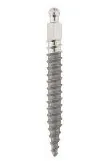
All-on-4 uses exactly four implants per arch, with the two back implants placed at an angle to engage denser available bone. All-on-6 uses six implants, generally providing additional support and distribution of biting force across more anchor points.
Why Would a Surgeon Recommend Six Instead of Four?
Additional implants can provide more support for patients with higher bite force, certain bone conditions where distributing force across more points is advantageous, or cases where the surgeon determines extra stability better serves the long-term success of the restoration.
Does More Implants Always Mean Better Outcomes?
Not automatically — the goal is matching the number of implants to what your specific bone and bite actually need, not simply maximizing the number for its own sake. A well-planned All-on-4 case, appropriate for the specific patient, can be entirely successful, just as a well-planned All-on-6 case suits patients whose situation calls for that additional support.
Bone Requirements Comparison
All-on-4 was specifically designed to work with less available bone by using angled placement to access denser areas. All-on-6 generally requires bone at six separate sites rather than four, which can matter for patients with more limited bone in certain areas, potentially making All-on-4's approach more accessible without needing grafting in more locations.
Cost Differences
All-on-6 generally involves a higher cost than All-on-4, reflecting the additional implants and associated surgical time and materials, though the exact difference varies by provider and specific case.
Recovery Comparison
Both approaches involve a similar overall healing timeline for osseointegration, generally measured in months. The surgical procedure for All-on-6 is somewhat more involved, given the additional implant sites, though this doesn't necessarily translate to a significantly longer recovery period for most patients.
Which Is More Common?
All-on-4 is generally more widely used and marketed, partly due to its more accessible bone requirements and lower relative cost, though All-on-6 remains a well-established option specifically recommended when a patient's case calls for the additional support it provides.
Can You Choose Between Them Yourself?
Not really — this is a clinical decision your surgeon makes based on imaging and evaluation of your specific bone quality, quantity, and bite forces, rather than a preference-based choice similar to picking a crown material. It's reasonable to ask your surgeon why they're recommending one over the other for your specific case.
What Happens If All-on-4 Doesn't Provide Enough Support?
If a surgeon determines during planning or, less commonly, during treatment that additional support is needed, they may recommend adding implants, moving toward an All-on-6 approach, or adjusting the treatment plan in another way based on your specific situation.
Long-Term Outcomes Comparison
Both approaches have established track records of long-term success when properly matched to appropriate candidates. Neither is universally "better" — appropriateness for your specific bone, bite, and overall case is what determines a good long-term outcome, more than the specific number of implants involved.