Dental Implants · 8 min read
All-on-4 vs. Dentures: A Direct, Honest Comparison
- Written by
- 1PleasantonDentist Editorial Team, Editorial team
- Reviewed by
- Editorial team
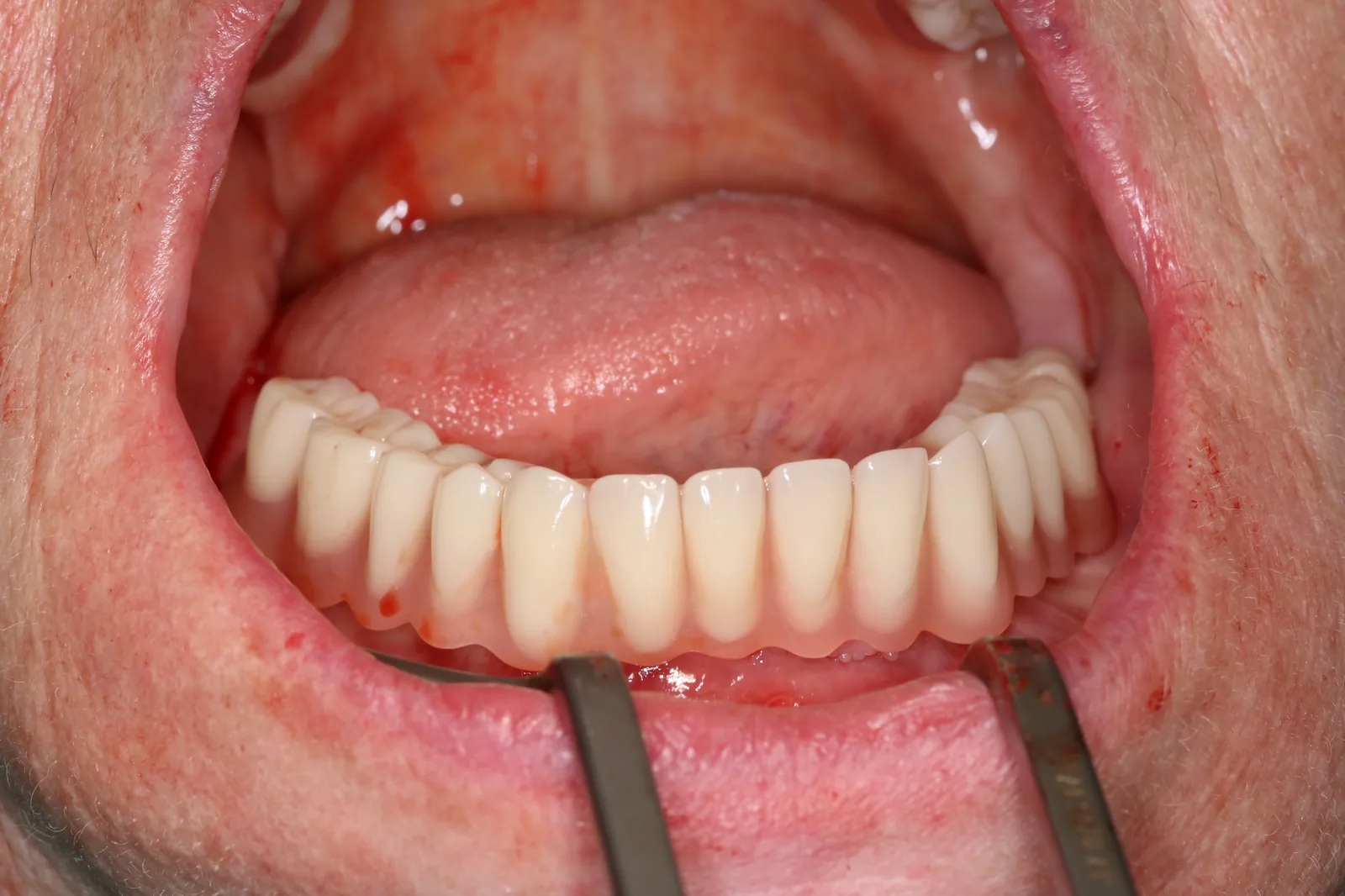
Image: Zypcu · BY-SA 3.0 · Source
Choosing between All-on-4 implants and traditional dentures? Here's a direct, side-by-side comparison covering cost, stability, and daily life.
Stability and Daily Function
All-on-4 is fixed in place, anchored by four implants, meaning it doesn't shift, slip, or require adhesive the way a traditional denture can. Traditional dentures rest on the gums and jawbone, and even well-fitted ones can move somewhat during eating or speaking, particularly lower dentures, which don't benefit from the natural suction that upper dentures often get.
Jawbone Health Over Time
All-on-4 implants stimulate the jawbone similarly to natural tooth roots, helping preserve bone volume over the years. Traditional dentures don't provide this stimulation, meaning the jawbone ridge underneath a denture gradually shrinks over time, which is part of why dentures often need relining or replacing periodically to maintain a good fit.
Upfront Cost
Traditional dentures are generally significantly less expensive upfront than All-on-4, since they don't involve surgery, implant materials, or the extended treatment timeline All-on-4 requires. This remains one of the most significant deciding factors for a lot of people.
Treatment Timeline
Dentures can typically be fabricated and fitted within a matter of weeks. All-on-4 involves a longer overall process, from initial surgery through the healing period to the final permanent restoration, often spanning several months to about a year for the complete process.
Surgery and Recovery
All-on-4 requires surgical implant placement, with an associated recovery period and, for some patients, a preceding bone grafting procedure. Dentures don't require surgery at all, making them the less invasive option for people who want to avoid a surgical procedure altogether.
Long-Term Durability
With proper care, the implants supporting an All-on-4 restoration often last decades, though the attached bridge may need eventual replacement due to normal wear. Dentures typically need relining or full replacement every several years as the jawbone shape continues changing over time, meaning the cumulative cost of dentures over many years can sometimes approach or exceed the upfront cost difference with All-on-4, depending on individual circumstances.
Comfort and Adjustment
Many people who've worn both describe All-on-4 as feeling closer to natural teeth, since it's fixed and doesn't rely on gum pressure or suction. Dentures require an adjustment period as well, but ongoing comfort varies more from person to person with removable options, since fit and stability can change as the jawbone shape shifts over the years.
Who Tends to Choose Which Option
People prioritizing lower upfront cost, wanting to avoid surgery, or needing a faster solution often lean toward dentures. People prioritizing long-term stability, avoiding the daily inconvenience of a removable appliance, and willing to invest more upfront and commit to a longer treatment timeline often lean toward All-on-4. Neither preference is wrong — they reflect genuinely different priorities.
Frequently Asked Questions About All-on-4 vs. Dentures
Can I switch from dentures to All-on-4 later? Often, yes, assuming you have adequate jawbone remaining at the time. Since dentures don't stimulate the jawbone the way implants do, waiting a long time can sometimes mean more bone loss has occurred, potentially requiring a bone graft before All-on-4 becomes an option, so this is worth discussing with your dentist if you're considering the switch down the road.
Is All-on-4 worth the extra cost compared to dentures? This depends entirely on your personal priorities. Many people who value stability, avoiding daily removal, and long-term jawbone preservation find the added cost worthwhile, while others prioritize the lower upfront cost and non-surgical nature of dentures. Both are reasonable, valid choices based on different values.
Do implant-supported dentures offer a middle ground between the two? Yes, implant-supported (or implant-retained) dentures use a smaller number of implants to add stability to a still-removable denture, offering more stability than a standard denture at a lower cost than a fully fixed All-on-4 restoration, making this a genuine third option worth discussing with your dentist.
Which option looks more natural? Both can be designed to look quite natural, since modern denture and All-on-4 restorations are both custom-fitted and shaded to match your desired appearance. The more noticeable difference tends to be in function and stability rather than visible appearance.
How do I decide which option is right for me? Consider your budget, how you feel about surgery, how much stability matters to your daily comfort and confidence, and your timeline for wanting a completed solution. A thorough consultation with a dentist who can honestly walk through both options based on your specific mouth and goals is the best way to make this decision.