
Dental Implants · 8 min read
All-on-4 vs. Traditional Dentures: A Direct, Practical Comparison
- Written by
- 1PleasantonDentist Editorial Team, Editorial team
- Reviewed by
- Editorial team
Image: Alexmit art · BY-SA 4.0 · Source
One is fixed and surgical, one is removable and non-invasive. Here's an honest, side-by-side look at how these two full-arch options actually compare.
The Fundamental Structural Difference
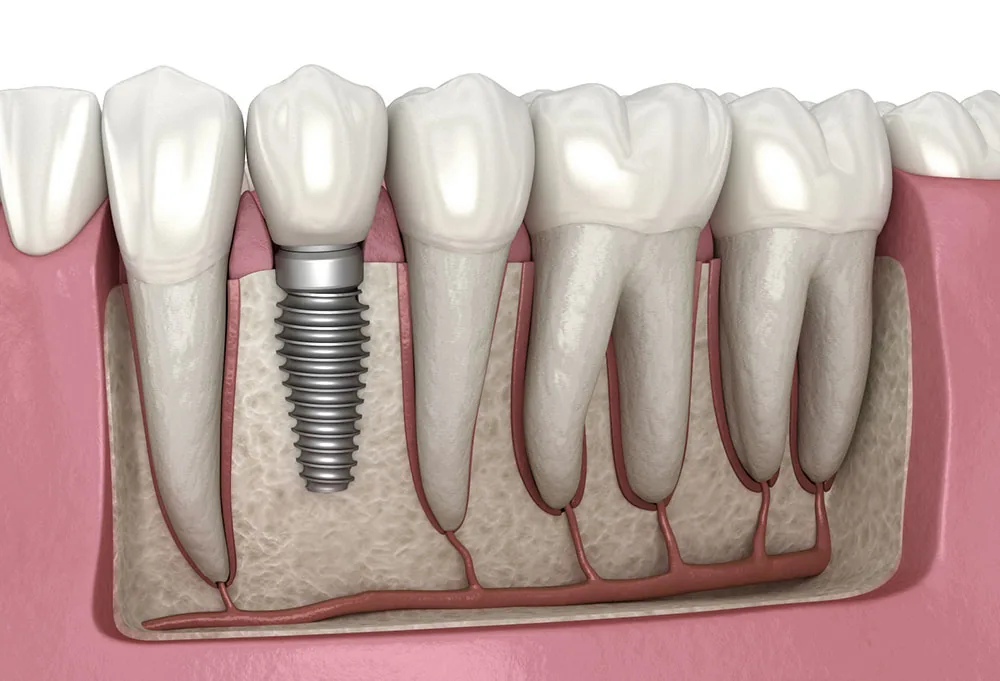
Traditional dentures rest on the gums and jawbone ridge, held in place by suction and, often, adhesive, without any surgical anchoring. All-on-4 uses four surgically placed implants per arch to support a fixed bridge that doesn't come out and functions much more like natural teeth.
Stability and Function Comparison
All-on-4 offers significantly more stability, since it's anchored directly into the jawbone rather than relying on suction and gum contact, which translates into more confident, natural chewing and speaking. Traditional dentures, particularly lower dentures, can shift or feel loose during eating or talking, a common source of frustration for denture wearers.
Surgical Involvement
Traditional dentures require no surgery at all, making them accessible to people who want to avoid a surgical procedure or aren't good candidates for surgery due to health reasons. All-on-4 requires a surgical procedure to place the implants, along with the associated healing time.
Treatment Timeline
Traditional dentures can typically be completed within a matter of weeks. All-on-4 involves a considerably longer overall timeline, often several months from initial surgery through the final permanent restoration, given the healing time implants require to properly fuse with the bone.
Bone Preservation
This is one of the most significant long-term differences. All-on-4 implants, anchored in the jawbone, help stimulate and preserve bone volume over time, similar to how natural tooth roots function. Traditional dentures don't provide this stimulation, meaning the jawbone ridge continues to gradually shrink underneath them, which is why dentures typically need relining or replacement as this bone changes shape over the years.
Cost Comparison
Traditional dentures are generally significantly less expensive upfront than All-on-4, reflecting the absence of surgery and implant materials. All-on-4 involves a considerably higher initial investment, though its greater durability and stability may offer better long-term value for some patients when weighed against the ongoing adjustments and eventual replacement traditional dentures typically require.
Daily Care Comparison
Traditional dentures are removed daily for cleaning and typically at night, requiring a specific cleaning routine using denture-appropriate products. All-on-4, being fixed in place, requires a different care approach, often involving a water flosser or specific tools to clean underneath the fixed bridge, without the daily removal traditional dentures involve.
Who Is a Better Candidate for Traditional Dentures?
People who want to avoid surgery, have budget constraints that make All-on-4's higher upfront cost impractical, or aren't good candidates for implant surgery due to health considerations often find traditional dentures the more practical, accessible option.
Who Is a Better Candidate for All-on-4?
People prioritizing maximum stability and a feel closest to natural teeth, who are good candidates for surgery, and who can manage the higher upfront cost, sometimes through financing, often find All-on-4 worth the greater investment for the improved daily function and long-term bone preservation it offers.
Can You Switch From Traditional Dentures to All-on-4 Later?
Yes, this is a common transition many people make, though waiting a long time with traditional dentures means more bone loss may have occurred in the meantime, potentially requiring bone grafting before All-on-4 implants can be placed, which is worth factoring into your decision if you think you might want to make this switch eventually.