
Dental Implants · 8 min read
Dental Bridges: Types, Cost, and How They Compare to Implants
- Written by
- 1PleasantonDentist Editorial Team, Editorial team
- Reviewed by
- Editorial team
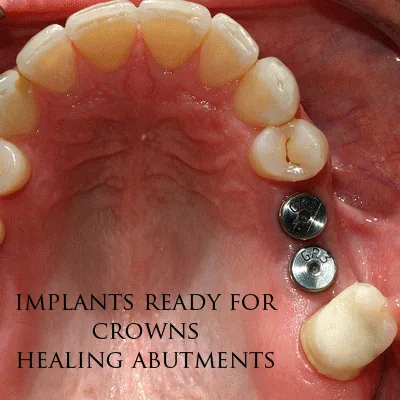
Image: Coronation Dental Specialty Group[1] · BY-SA 3.0 · Source
A dental bridge fills a gap using your existing teeth as anchors. Here's how the procedure works, what it costs, and how it compares to an implant.
What Is a Dental Bridge?
The teeth immediately next to the gap, called abutment teeth, are reshaped to receive crowns, similar to preparing a tooth for a standalone crown. Those crowns are connected to a false tooth, called a pontic, that fills the space where your natural tooth used to be, all fabricated as one connected piece and cemented into place.
### Materials Used
Bridges can be made from porcelain, porcelain fused to metal, or zirconia, with the choice depending on the location of the bridge in your mouth, the bite forces involved, and cosmetic preferences, similar to the material considerations involved in choosing a crown.
### Benefits
A bridge restores your ability to chew normally in the area of the missing tooth, prevents your other teeth from gradually shifting into the empty space, and can be completed considerably faster than an implant, often within a few weeks across just two or three appointments.
Types of Dental Bridges
### Traditional/Cantilever Bridge
A traditional bridge uses a healthy, natural tooth on both sides of the gap for support. A cantilever bridge is used when there's only a healthy anchor tooth on one side, supporting the false tooth from that single side rather than two, which is generally considered a less ideal option than a traditional bridge but is sometimes the only viable choice depending on which teeth remain.
### Maryland Bridge
A more conservative option that uses a metal or porcelain framework bonded to the back surface of the neighboring teeth, rather than full crowns, meaning less of the natural tooth structure needs to be altered. This style is generally reserved for front teeth and lighter bite forces, since the bonded framework isn't as strong as a full crown-supported bridge.
### Implant-Supported Bridge
Instead of relying on natural teeth for support, this version anchors the bridge to one or more dental implants, which is often used when several consecutive teeth are missing and there aren't healthy natural teeth on both sides to serve as traditional anchors.
The Dental Bridge Procedure
Getting a traditional bridge typically starts with reshaping the two anchor teeth, similar to preparing a tooth for a crown. An impression or digital scan is taken and sent to a lab, where your custom bridge is fabricated over one to two weeks, with a temporary bridge placed in the meantime. Once the permanent bridge is ready, it's checked for fit and bite, adjusted as needed, and permanently cemented into place.
### Bone Grafts and Dental Bridges
Bridges themselves don't require bone grafting, since they don't involve any surgical placement into the jawbone the way an implant does. If you're considering an implant-supported bridge specifically, bone grafting may be relevant if the implant sites don't have adequate bone, which is a separate consideration from a traditional tooth-supported bridge.
Dental Bridge Cost
### Cost by Type of Bridge
A traditional bridge and a Maryland bridge are generally less expensive than an implant-supported bridge, since they don't involve the surgical component and associated costs that implants require. Cantilever bridges are often priced similarly to traditional bridges, though the exact cost depends on the number of teeth and materials involved.
### Cost by State
Regional cost of living has a real effect on dental bridge pricing, with larger metropolitan areas and higher-cost regions typically seeing higher prices than smaller towns or lower-cost-of-living areas, reflecting differences in practice overhead rather than differences in the procedure itself.
Front Dental Bridges
Bridges replacing a front tooth carry some additional cosmetic considerations compared to a back-tooth bridge, since appearance matters more in a highly visible area. Materials and shading are typically chosen with extra attention to matching your natural smile, and Maryland bridges are more commonly considered for front teeth specifically because the bite forces are generally lighter there than on back molars.
Recovery, Lifespan, and Aftercare
### How Long Does a Dental Bridge Last?
With good care, a dental bridge typically lasts somewhere in the range of ten to fifteen years, sometimes longer, before needing replacement. This depends significantly on how well the abutment teeth supporting the bridge stay healthy over time, since decay or gum disease affecting those anchor teeth can shorten the bridge's overall lifespan.
### Caring for Your Dental Bridge
Cleaning underneath a bridge requires more attention than regular flossing between natural teeth, since regular floss can't get underneath the connected pontic the way it slides between two separate teeth. A floss threader, a specific bridge-cleaning floss designed for this purpose, or a water flosser can help clean this harder-to-reach area effectively. Keeping the abutment teeth healthy through regular checkups and good hygiene is just as important as caring for the bridge itself, since those teeth are what's actually holding everything in place.
Dental Bridge vs. Implant: Which Is Better?
Neither is universally better — the right choice depends on your specific situation. A bridge is faster to complete and doesn't require surgery, but it requires altering the healthy teeth next to the gap and generally doesn't last as long as a well-cared-for implant. An implant doesn't touch neighboring teeth and tends to last longer, often decades, but involves a longer treatment timeline, a surgical procedure, and typically a higher upfront cost. If your neighboring teeth already have significant fillings or are otherwise good candidates for crowns anyway, a bridge might make more practical sense. If your neighboring teeth are perfectly healthy and you'd rather not alter them, an implant may be the more appealing long-term option.
Alternatives to Dental Bridges
### Partial Dentures
A removable partial denture can replace one or more missing teeth without permanently altering any neighboring teeth, offering a less invasive and generally less expensive option, though it's removable and typically less stable than a fixed bridge.
### Dental Implants
As discussed, an implant offers a standalone replacement that doesn't rely on or affect neighboring teeth at all, generally lasting longer than a bridge, though requiring a longer treatment timeline and surgery.
When to Call Your Dentist
Reach out if your bridge feels loose, if you notice new sensitivity in one of the abutment teeth, if food seems to be getting trapped underneath the bridge more than usual, or if you notice any visible damage to the bridge itself. A loose bridge in particular is worth addressing promptly, since it can allow bacteria to reach the abutment teeth underneath in ways that increase decay risk.
Frequently Asked Questions About Dental Bridges
What's the ideal age for a dental bridge? There's no specific ideal age — bridges are appropriate for adults of essentially any age with a missing tooth and healthy neighboring teeth to serve as anchors. The decision comes down more to the condition of your specific teeth than your age.
How many teeth can be on a bridge? This depends on the strength and health of the anchor teeth supporting it, but bridges commonly replace one to three consecutive missing teeth. Replacing a larger span with a single bridge puts more stress on the anchor teeth, which is part of why very large gaps are sometimes better addressed with an implant-supported bridge or another approach instead.
Is a dental bridge painful? The procedure itself is performed under local anesthesia, so significant pain during placement is uncommon. Some soreness in the reshaped anchor teeth for a few days afterward is normal, similar to the sensitivity experienced after getting a standard crown.
Do bridges feel like real teeth? Most people adjust to a well-fitted bridge within a short period and describe it as feeling close to natural, since it's fixed in place rather than removable. There can be a brief adjustment period as your tongue and bite get used to the slightly different shape underneath the bridge compared to your original natural tooth.
Can a dental bridge be removed and recemented? In some cases, yes, if the underlying issue is simply that the cement has weakened over time and the bridge and abutment teeth are otherwise healthy. If there's decay or damage to an abutment tooth underneath, more significant treatment, sometimes including redoing the bridge entirely, may be needed instead.