Dental Implants · 8 min read
Dental Implant Alternatives: Comparing Bridges, Dentures, and Other Options
- Written by
- 1PleasantonDentist Editorial Team, Editorial team
- Reviewed by
- Editorial team
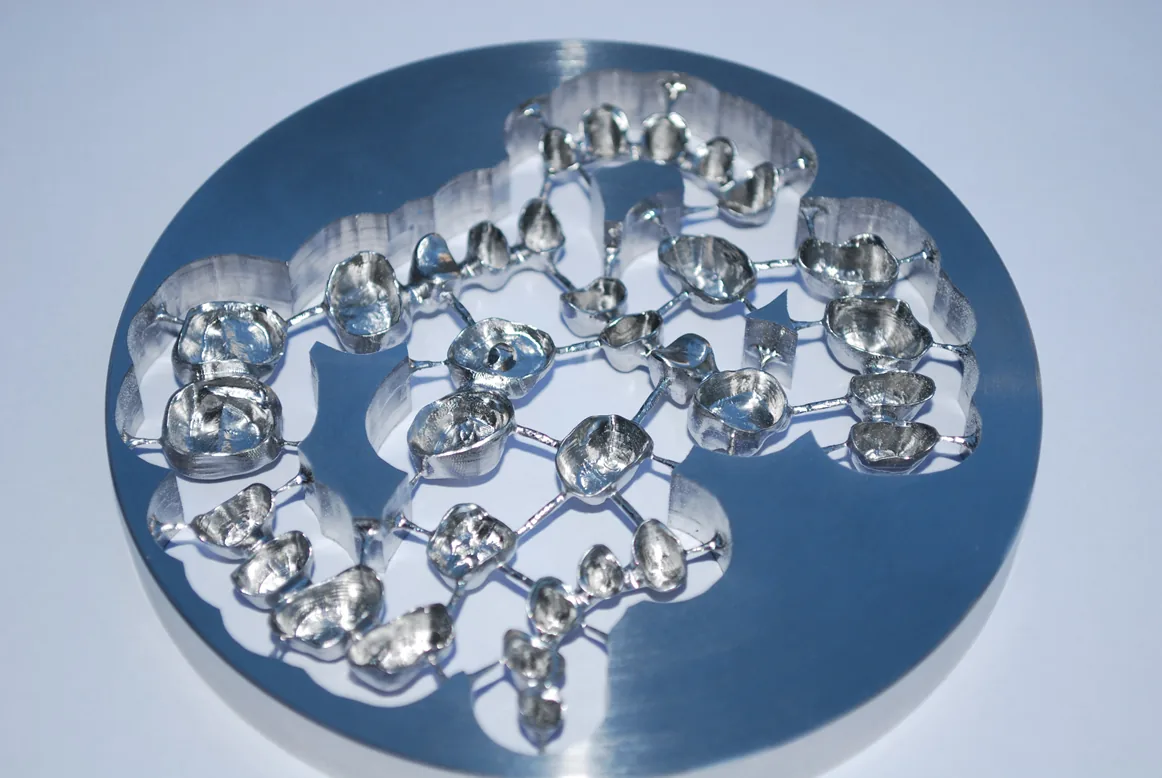
Image: Sescoi CAD/CAM · BY-SA 2.0 · Source
Implants aren't the only way to replace missing teeth. Here's an honest look at bridges, dentures, and implant-supported options, side by side.
What Are the Alternatives to Dental Implants?
The three main alternatives are dental bridges, removable dentures, and implant-supported dentures, which sit somewhere in between a full implant approach and a traditional removable denture. Each one solves the same basic problem — replacing missing teeth — in a genuinely different way, with different trade-offs around cost, how long they last, how they feel day to day, and what they require from the rest of your mouth.
Dental Bridges
A dental bridge fills the gap left by one or more missing teeth using a false tooth, or several, anchored in place by the natural teeth on either side of the gap. Those anchor teeth get shaped down and fitted with crowns, which support the false tooth suspended between them, essentially "bridging" the space.
### Types of Dental Bridges
A traditional bridge is the most common type, using crowns on both neighboring teeth to support the false tooth in the middle. A cantilever bridge is used when there's only a healthy tooth on one side of the gap rather than both, anchoring the false tooth from a single side instead of two. A Maryland bridge takes a less invasive approach, using a metal or porcelain framework bonded to the back of the neighboring teeth rather than crowns that require more significant reshaping, though this style is generally reserved for front teeth and lower-bite-force situations, since it's not as strong as a traditional bridge.
Bridges are typically completed faster than implants — often within a few weeks across two or three appointments — and can cost less upfront, depending on the specific case. The trade-off is that healthy neighboring teeth need to be permanently altered to support the bridge, and the bridge itself generally doesn't last as long as a well-cared-for implant, often needing replacement after ten to fifteen years, sometimes sooner.
Removable Dentures
Dentures are removable appliances that replace some or all of the teeth in an arch, resting on the gums rather than being anchored into the jawbone.
### Complete vs. Partial Dentures
A complete denture replaces an entire arch of teeth when none of the natural teeth in that arch remain. A partial denture replaces some missing teeth while working around the natural teeth that are still present and healthy, often using small clasps or attachments to help it stay in place. Both types are removable, meaning they come out for cleaning and typically at night, and both rest primarily on the gum tissue and jawbone ridge rather than being surgically anchored.
Dentures are generally the least expensive upfront option and don't require surgery, which makes them appealing for people who want to avoid a surgical procedure entirely or who need a faster, more affordable solution. The trade-offs are real, though — dentures can shift or feel loose, particularly lower dentures, which don't have the same suction stability that upper dentures often get from the shape of the palate. They also don't stimulate the jawbone the way a natural tooth root or an implant does, so the jawbone ridge underneath a denture tends to gradually shrink over the years, which is why dentures often need relining or replacing periodically to keep fitting well.
Implant-Supported Dentures
This option sits between a traditional denture and a full set of individual implants. A smaller number of implants — often four to six per arch, depending on the specific approach — are placed in the jawbone, and a denture is then designed to attach to those implants, either as a removable overdenture that snaps on and off, or as a fixed bridge that stays in place permanently and is only removed by a dentist.
### Full-Mouth and All-on-4 Implant Dentures
Approaches like All-on-4 use precisely four implants, placed at specific angles, to support a full, fixed arch of replacement teeth. Because a smaller number of implants support the entire arch, rather than needing one implant for every missing tooth, this brings the cost down significantly compared to individually implanting every tooth, while still offering much of the stability and jawbone-preserving benefit that implants provide over a standard denture.
Comparing Costs: Implants vs. Bridges vs. Dentures
Individual implants generally have the highest upfront cost per tooth, but they also tend to last the longest with proper care, often decades, which changes the math when you consider cost over the long run rather than just the initial price tag. Bridges typically fall in the middle on upfront cost, but usually need replacement well before an implant would, meaning the true lifetime cost can end up higher than it first appears if you need to redo it more than once over the years. Removable dentures usually have the lowest upfront cost, but they generally require the most ongoing adjustments, relines, and eventual full replacement as your jawbone shape changes over time, which adds to their cost over a long enough timeline. Implant-supported dentures sit in between a standard denture and full individual implants, offering more stability and durability than a standard denture, generally at a lower total cost than replacing every tooth individually with its own implant.
There's no single "cheapest" option once you look past the initial price tag, since durability and how often each option needs to be redone or adjusted play a huge role in the real total cost over time.
Does Insurance Cover These Alternatives?
Coverage varies enormously by plan for all of these options, not just implants. Some dental insurance plans cover a meaningful portion of bridges and dentures as standard restorative procedures, sometimes with better coverage than they offer for implants specifically, since implants are a newer category of treatment that some older insurance plans still don't fully account for. Implant-supported dentures can be trickier from a coverage standpoint, since they combine implant placement with a denture, and different parts of that combined treatment may be covered differently, or not at all, depending on your specific plan. The only reliable way to know is to call your insurer directly, describe the specific treatment your dentist is recommending, and ask what percentage, if any, is covered.
How to Choose the Right Option for You
A few honest questions can help narrow this down. How much can you realistically spend right now, and does the option you're leaning toward fit within that, including any financing you'd need? How long do you want this solution to last before needing to think about it again — are you comfortable with something that may need replacing in ten years, or do you want to minimize how often you have to revisit this? Are you comfortable with surgery, or would you strongly prefer to avoid it if there's a reasonable non-surgical option? And how do you feel about altering healthy neighboring teeth, which a bridge requires but an implant doesn't?
There's genuinely no universally correct answer here. A retired grandparent on a fixed budget who's fine with a removable option might reasonably choose a denture. A working professional who wants to avoid ever thinking about their tooth replacement again might reasonably choose an implant despite the higher upfront cost. Both are legitimate decisions based on different priorities, and a good dentist will walk you through the trade-offs honestly rather than pushing you toward the most expensive option by default.
Frequently Asked Questions About Dental Implant Alternatives
Is a bridge or an implant better for a single missing tooth? Neither is universally better — it depends on your priorities. An implant doesn't require altering the healthy teeth next to the gap and tends to last longer, while a bridge is typically faster to complete and may cost less upfront. Your dentist can help you weigh these based on the health of your neighboring teeth and your specific goals.
Can I switch from dentures to implants later if I start with dentures now? Often, yes, assuming you have adequate jawbone remaining at the time you'd want to make the switch. Because dentures don't stimulate the jawbone the way implants do, waiting a long time before switching can sometimes mean more bone loss has occurred, which might require a bone graft before implants become an option. This is worth discussing with your dentist if you think you might want to transition down the road.
Are implant-supported dentures more comfortable than regular dentures? Many people who switch report feeling more secure and comfortable with implant-supported dentures, since they don't rely solely on suction or adhesive to stay in place the way a standard denture does. Comfort is still individual, though, and depends on how well the specific appliance is designed and fitted to your mouth.
Do all these options require the same number of dental visits? No. A bridge is typically completed in a few visits over a few weeks. Removable dentures often take a handful of visits for fitting and adjustments. Implants and implant-supported dentures generally take the longest overall timeline, often several months from initial placement to final restoration, due to the healing time needed for the bone to fuse with the implants.
Is it possible to combine different options in the same mouth? Yes, this is actually common. Someone might have an implant replacing one tooth, a bridge somewhere else, and a partial denture replacing several other missing teeth, depending on the specific condition of each area of their mouth. Treatment doesn't have to be all one approach across your entire mouth.