
Dental Implants · 8 min read
Implant-Supported Bridge: Replacing Multiple Teeth Without Touching Neighbors
- Written by
- 1PleasantonDentist Editorial Team, Editorial team
- Reviewed by
- Editorial team
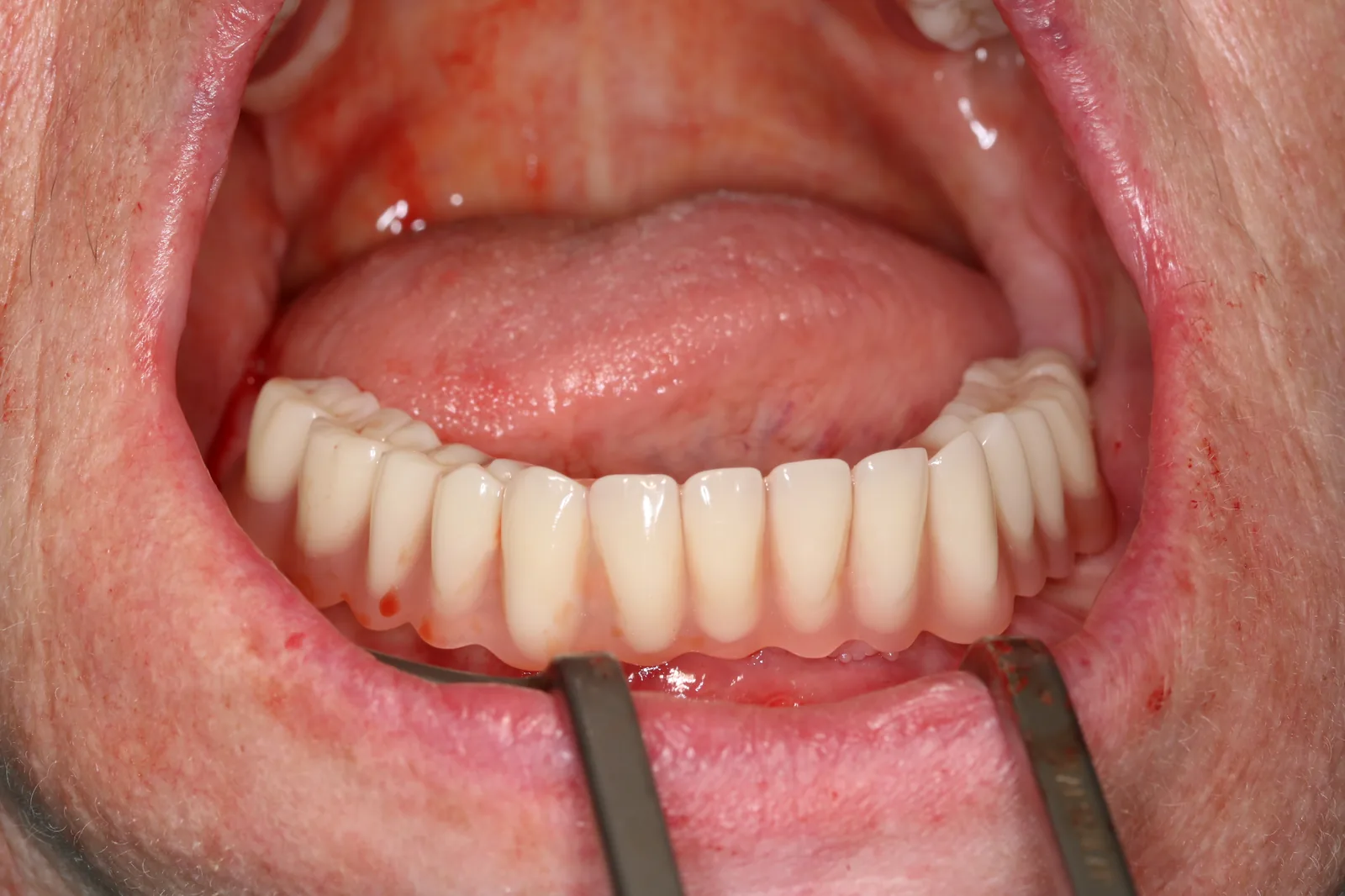
Image: Zypcu · BY-SA 3.0 · Source
For several missing teeth in a row, this option uses implants for support instead of natural teeth, avoiding the trade-offs of a traditional bridge.
What Is an Implant-Supported Bridge?
An implant-supported bridge replaces multiple missing teeth in a row using a bridge that's anchored to two or more dental implants surgically placed in the jawbone, rather than relying on natural teeth for support.
How Is This Different From a Traditional Tooth-Supported Bridge?
A traditional bridge anchors to natural teeth on either side of the gap, requiring those teeth to be reshaped for crowns and placing ongoing biting load on them. An implant-supported bridge anchors entirely to implants instead, leaving any remaining natural teeth completely untouched and unaltered.
How Is This Different From All-on-4, Which Also Uses Implants?
All-on-4 and similar full-arch approaches are specifically designed to replace an entire arch of teeth using a limited number of implants. An implant-supported bridge is typically used for replacing a smaller number of consecutive missing teeth, not necessarily the entire arch, using implants placed specifically in that more limited area.
How Many Implants Are Typically Needed for an Implant-Supported Bridge?
This depends on how many teeth are being replaced, but generally, implants are placed at intervals along the gap, with the bridge spanning between them, meaning you don't necessarily need one implant for every single missing tooth, since the bridge can span across a properly supported distance.
What Are the Advantages of an Implant-Supported Bridge Over a Traditional Bridge?
Since no natural teeth need to be reshaped or bear additional biting load, this option preserves the health of neighboring teeth, and like other implant-based solutions, it helps maintain jawbone volume in the treated area through the same stimulation mechanism relevant to individual implants.
What Are the Trade-Offs Compared to a Traditional Bridge?
This option requires surgery to place the implants, along with the associated healing time before the final bridge can be completed, and generally involves a higher upfront cost compared to a traditional tooth-supported bridge.
How Long Does the Full Treatment Process Typically Take?
This varies based on healing time needed for the implants to properly integrate with the bone, generally spanning a few months from initial surgery through the final bridge placement, similar to the general timeline discussed for individual implants.
Is Bone Grafting Sometimes Needed Before This Type of Bridge?
Yes, if the specific area doesn't have adequate bone volume to support the planned implants, bone grafting may be recommended first, similar to the considerations relevant to individual implant placement.
How Does an Implant-Supported Bridge Compare to All-on-4 for Someone Missing Several, But Not All, Teeth?
For someone missing several consecutive teeth but who still has healthy remaining natural teeth elsewhere in that arch, an implant-supported bridge addressing just the specific gap is generally the more appropriate, targeted solution, while All-on-4 is specifically designed for replacing an entire arch when most or all teeth in that arch are missing or need replacement.
Does an Implant-Supported Bridge Feel Different From a Traditional Bridge Day to Day?
Many patients report that implant-supported restorations feel more stable and function more like natural teeth compared to a traditional bridge, given the solid anchoring provided by the implants rather than relying on natural tooth support.
Is This Option More Durable Than a Traditional Bridge?
Generally, yes, implant-supported restorations tend to have a strong long-term track record, and since there's no reliance on natural tooth support that could itself eventually fail, this can offer genuine long-term durability advantages, though proper care and maintenance remain important regardless of the specific bridge type chosen.