Dental Implants · 8 min read
Implants vs. Dentures: Which One Actually Fits Your Situation
- Written by
- 1PleasantonDentist Editorial Team, Editorial team
- Reviewed by
- Editorial team
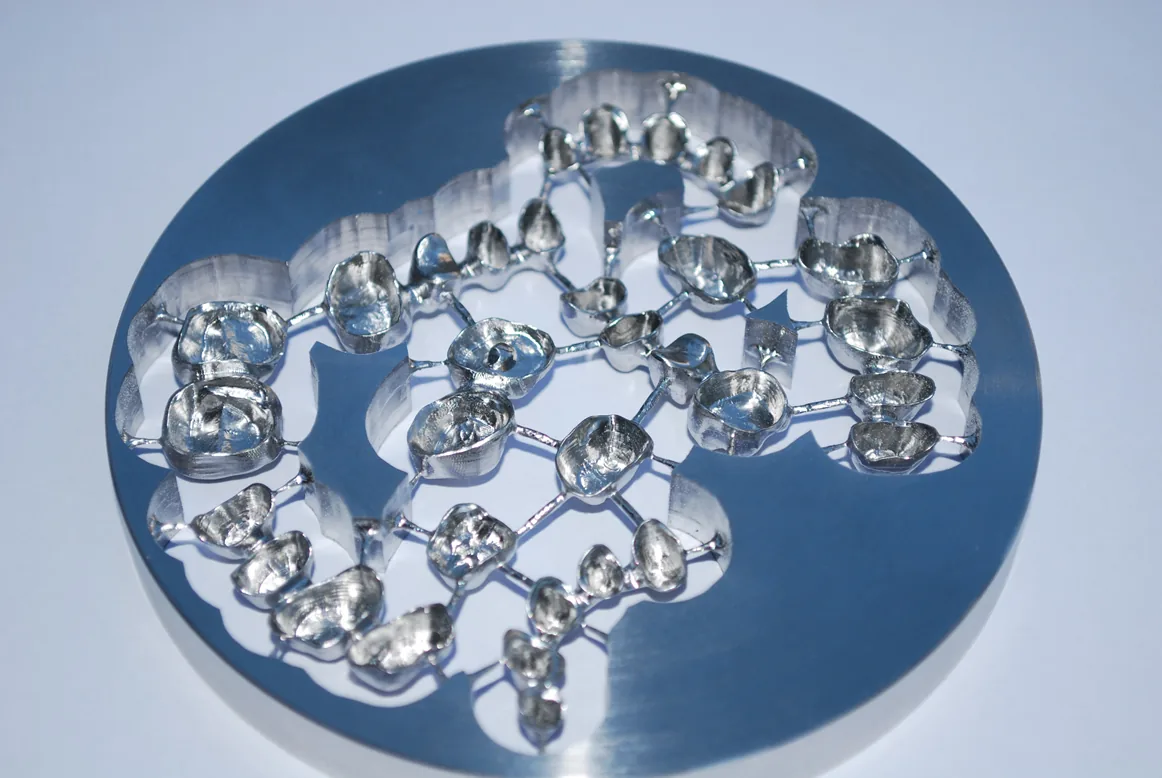
Image: Sescoi CAD/CAM · BY-SA 2.0 · Source
For single or multiple missing teeth, implants and dentures solve the problem differently. Here's how they really compare beyond the marketing.
The Core Difference
An implant is surgically anchored into the jawbone, functioning as an artificial tooth root that supports a crown, bridge, or denture attached to it. A denture, whether partial or complete, rests on the gums and jawbone without any surgical anchoring, relying on suction, adhesive, or clasps around remaining teeth to stay in place.
Stability
Implants don't shift or move once healed, since they're fused directly into bone. Dentures, resting on soft tissue, can move somewhat during eating or speaking, and this instability is generally more noticeable with lower dentures than upper ones.
Impact on Jawbone
Implants stimulate the jawbone similarly to a natural tooth root, helping prevent the bone loss that naturally occurs in areas missing teeth. Dentures don't provide this stimulation, meaning the jawbone ridge underneath continues to gradually shrink over time regardless of how well the denture initially fit.
Cost
Implants typically cost more upfront per tooth than a comparable denture, reflecting the surgical procedure, materials, and extended treatment timeline. Dentures are generally the more affordable option initially, though their need for periodic relining or replacement over the years adds to their total cost over a long enough timeline.
Timeline
Implants require a treatment period spanning months, due to the healing time needed for bone to fuse with the implant. Dentures can typically be fabricated and fitted within a matter of weeks.
Daily Maintenance
Implants are cared for essentially the same way as natural teeth, with regular brushing and flossing. Dentures require daily removal for cleaning, and most are meant to come out at night as well, which is a genuinely different daily routine than caring for fixed teeth.
Longevity
With proper care, implants often last decades. Dentures typically need relining or replacing every several years due to the ongoing changes in jawbone shape underneath them.
Which Option for Which Situation
For a single missing tooth, an implant avoids altering neighboring healthy teeth the way a bridge would, and many people find it worth the investment for that reason alone. For several missing teeth, either a partial denture or several individual implants might be considered, depending on cost and personal preference. For an entire arch of missing teeth, both a complete denture and an implant-supported full-arch solution like All-on-4 are viable, differing significantly on cost, stability, and treatment timeline.
Can You Combine Both?
Yes, this is common. Someone might have an implant-supported crown replacing one tooth, while also wearing a removable partial denture for several other missing teeth elsewhere in their mouth. Treatment doesn't have to be uniformly one approach across your entire mouth.
Frequently Asked Questions About Implants vs. Dentures
Is it painful to switch from dentures to implants? The implant surgery itself involves typical post-surgical discomfort, generally manageable with standard pain relief, similar to recovering from any minor oral surgery. Many people who make this switch report the temporary discomfort of surgery is worth the long-term improvement in stability and comfort compared to dentures.
Can implants be used to make dentures more stable without going fully fixed? Yes, implant-supported (or implant-retained) dentures use a smaller number of implants to significantly improve the stability of an otherwise still-removable denture, offering a middle ground between a standard denture and a fully fixed implant restoration.
Do implants require more dental visits than dentures? Yes, generally. Implant treatment involves the initial surgery, a healing period, and typically a separate visit for the final restoration, spread across months. Dentures usually involve fewer total visits over a shorter timeframe for the initial fitting process.
Which option is better for older adults? There's no universal answer based on age alone — bone health, overall health, budget, and personal preference matter more than age itself in determining which option is appropriate. Many older adults are excellent implant candidates, while others reasonably prefer the simpler process dentures offer.
Does insurance treat implants and dentures differently? Often, yes. Some dental insurance plans have historically covered dentures more comprehensively than implants, since implants are a comparatively newer category of treatment that some older insurance plans still don't fully account for, though this varies by specific plan and continues to shift as implants have become more mainstream.