Dental Implants · 8 min read
Mini Dental Implants: When the Smaller Option Makes Sense
- Written by
- 1PleasantonDentist Editorial Team, Editorial team
- Reviewed by
- Editorial team
Image: Zypcu · BY-SA 3.0 · Source
Not every case needs a standard-size implant. Here's when mini dental implants are actually used and how they differ from the full-size version.
What Makes a Mini Implant "Mini"?
Mini dental implants are significantly narrower in diameter than standard implants, sometimes less than half the width, while still functioning on the same basic principle of being placed into the jawbone to support a replacement tooth or denture attachment.
Why Would Someone Need a Narrower Implant?
The most common reason is limited bone width at the implant site — some areas of the jaw simply don't have enough horizontal bone available for a standard-diameter implant without bone grafting first, and a mini implant can sometimes work within that narrower space without needing that additional grafting step.
Common Uses for Mini Implants
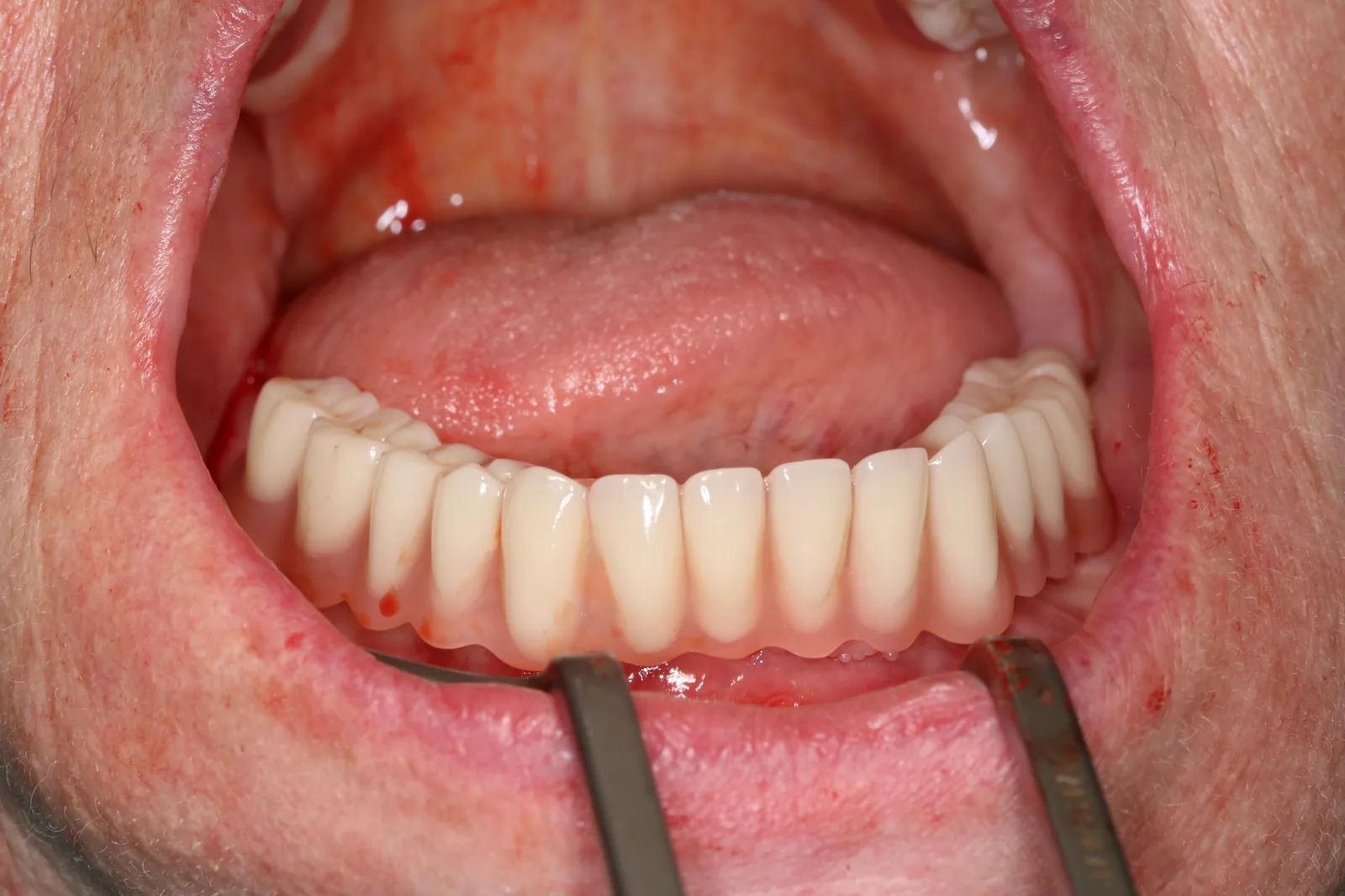
One of the most frequent applications is stabilizing a lower denture, where several mini implants are placed to give a removable denture significantly more grip and stability than relying on gum tissue and suction alone. They're also sometimes used for smaller front teeth where a standard implant's width would be more than necessary for the size of tooth being replaced.
How Does the Placement Procedure Differ?
Mini implant placement is often described as less invasive than standard implant surgery, sometimes not requiring the same incision and stitching a standard implant placement might involve, since the narrower design can sometimes be placed with a more minimally invasive technique. This can mean a somewhat quicker procedure and recovery for appropriate cases.
Are Mini Implants as Strong as Standard Implants?
Generally, no — their narrower diameter means they typically can't handle the same amount of biting force as a standard implant, which is part of why they're more commonly used for denture stabilization or smaller replacement teeth rather than as the primary solution for replacing a large molar that handles significant chewing force.
Recovery Comparison
Recovery from mini implant placement is often somewhat quicker than standard implants, partly due to the less invasive placement technique sometimes used, though individual healing still varies, and your dentist will give you a timeline specific to your case.
Cost Comparison
Mini implants are sometimes less expensive than standard implants, reflecting the smaller amount of material and, in some cases, a simpler placement procedure, though this varies by provider and specific case rather than being a fixed universal price difference.
Who Isn't a Good Candidate for Mini Implants?
Someone needing to replace a large back tooth that will handle significant chewing force is often better served by a standard implant, assuming adequate bone is available or achievable through grafting, since a mini implant may not provide sufficient long-term strength for that specific application.
Are Mini Implants a Permanent Solution or a Temporary Fix?
This depends on the specific application. For denture stabilization, mini implants are often intended as a long-term solution. In some cases, mini implants have also historically been used as a more immediate, transitional option while a patient waits for a standard implant site to be ready, though this specific use varies by provider and case.