Dental Implants · 8 min read
Missing Tooth Replacement: Comparing Every Real Option Side by Side
- Written by
- 1PleasantonDentist Editorial Team, Editorial team
- Reviewed by
- Editorial team
Image: Trohimenko YS · BY-SA 4.0 · Source
Implant, bridge, partial denture, or leaving the gap alone — each carries genuinely different trade-offs. Here's a single, honest comparison of all four.
Option One: Dental Implant
A surgically placed titanium or zirconia post integrates with your jawbone, topped with a crown that functions and looks like a natural tooth, offering the closest replication of a natural tooth's function and typically the best long-term durability among replacement options, at the highest upfront cost and longest overall treatment timeline, often several months.
Option Two: Dental Bridge
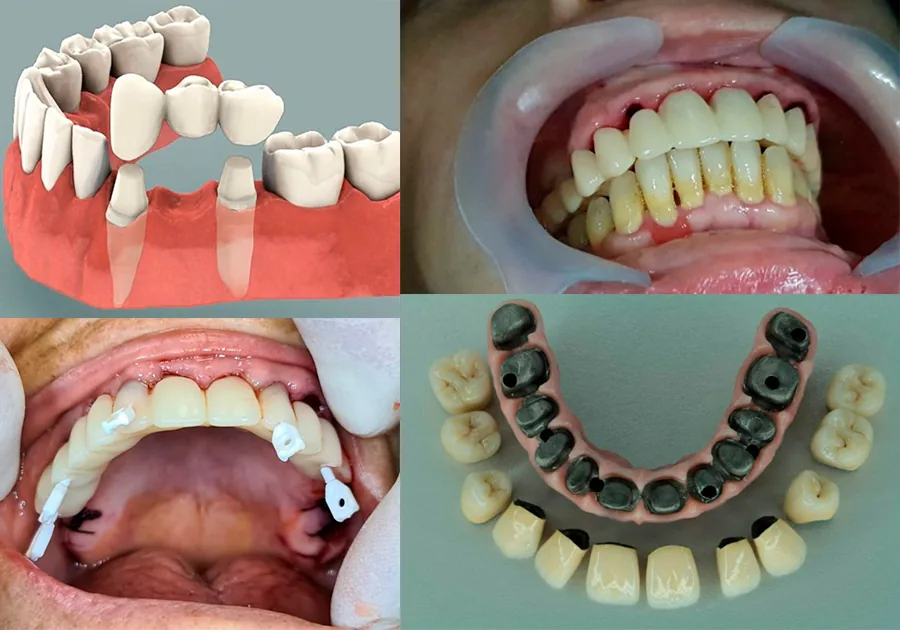
A fixed restoration anchored to crowns on the teeth adjacent to the gap, replacing the missing tooth without surgery, completed within a shorter timeline than an implant, generally at a lower cost, though it requires reshaping otherwise healthy adjacent teeth and doesn't provide the same bone-preserving stimulation an implant offers.
Option Three: Partial Denture
A removable appliance clasping onto remaining teeth, generally the least expensive option and requiring minimal to no alteration of adjacent teeth, though it requires daily removal for cleaning and generally provides less stability and a less natural feel compared to fixed options.
Option Four: Leaving the Gap Untreated
Choosing not to replace a missing tooth at all avoids any further treatment cost, but genuinely carries real, well-documented risks, including neighboring teeth gradually shifting into the space, opposing teeth potentially over-erupting into the gap, altered bite function, and jawbone loss at the site over time from lack of stimulation.
Why Does Leaving a Gap Untreated Carry Real Risk Rather Than Simply Being a Neutral Choice?
Teeth aren't static once one is missing — the surrounding teeth and bone actively respond to this change over months and years, meaning "doing nothing" isn't actually a stable, unchanging state but rather a choice that allows a specific, generally unfavorable pattern of changes to unfold gradually.
How Do These Options Compare on Jawbone Preservation?
Implants uniquely provide ongoing stimulation to the jawbone similar to a natural tooth root, helping preserve bone volume at that site, while bridges, partial dentures, and leaving the gap untreated don't provide this same stimulation, meaning bone loss at the site tends to continue gradually with these other options.
How Do These Options Compare on Overall Cost?
Generally, from least to most expensive: leaving the gap untreated has no direct treatment cost but carries the downstream risks discussed above, followed by partial dentures, then bridges, with implants typically representing the highest initial investment, though long-term value calculations can shift this comparison when factoring in durability and replacement frequency over many years.
How Do These Options Compare on Treatment Timeline?
A partial denture or bridge can typically be completed within weeks, while an implant generally requires several months from initial surgery to final restoration, representing a genuinely longer overall commitment.
How Do These Options Compare on Long-Term Durability?
Implants generally offer the strongest long-term track record, often lasting decades with proper care, while bridges and partial dentures typically have a somewhat shorter expected functional lifespan before needing repair or replacement.
Which Option Is Best for Someone Wanting to Avoid Surgery Entirely?
Both bridges and partial dentures avoid surgical placement, making either a reasonable choice for someone specifically wanting to avoid this aspect of implant treatment, or for someone who isn't medically a good candidate for implant surgery.
Which Option Makes the Most Sense for Replacing Several Missing Teeth at Once?
This depends on the specific pattern of missing teeth, with implant-supported bridges or full-arch solutions like All-on-4 being options for more extensive tooth loss, while a partial denture remains a practical, more affordable option for multiple gaps in different areas.
How Should You Actually Decide?
Weighing your priorities regarding budget, timeline, willingness to undergo surgery, and long-term durability preferences, then discussing your specific missing tooth situation and candidacy for each option directly with your dentist, helps you arrive at the choice genuinely right for your circumstances rather than a generic default.