Dental Implants · 8 min read
Resin-Bonded (Maryland) Bridge: The Less Invasive Way to Replace a Missing Tooth
- Written by
- 1PleasantonDentist Editorial Team, Editorial team
- Reviewed by
- Editorial team
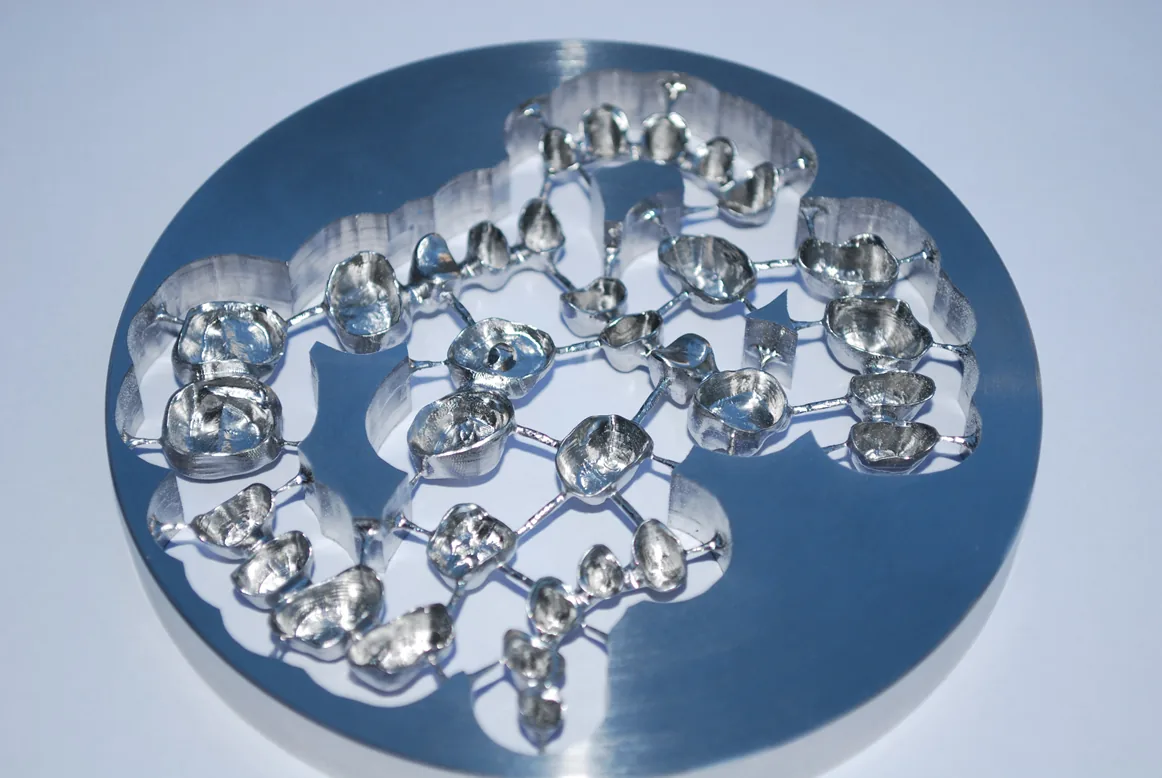
Image: Sescoi CAD/CAM · BY-SA 2.0 · Source
This bridge type skips the significant reshaping traditional bridges require, bonding to the back of neighboring teeth instead. Here's how it compares.
What Is a Resin-Bonded Bridge?
A resin-bonded bridge, commonly called a Maryland bridge, replaces a missing tooth using a false tooth attached to metal or ceramic wings that bond directly to the back surface of the neighboring teeth, without requiring the significant reshaping a traditional bridge's crowns would need.
How Is This Different From a Traditional Fixed Bridge?
A traditional bridge anchors the false tooth using full crowns placed over two adjacent, significantly reshaped teeth, while a Maryland bridge uses thin wings bonded to the back surface of the neighboring teeth with minimal preparation, making it a considerably more conservative approach to the supporting teeth.
What Are the Main Advantages of a Resin-Bonded Bridge?
The primary advantage is preserving significantly more of the neighboring teeth's healthy structure, since minimal to no reshaping is typically needed, along with a generally quicker treatment process and often lower cost compared to a traditional bridge.
What Are the Trade-Offs of Choosing This Option?
Resin-bonded bridges are generally considered less durable than traditional bridges over the long term, since the bonding attachment, while effective, doesn't provide quite the same level of retention and strength as full crowns, meaning they're more prone to the wings occasionally debonding over time.
Which Teeth Are Best Suited for a Resin-Bonded Bridge?
This option is most commonly used for replacing front teeth, where bite forces are generally lower than back teeth, making the bonding attachment more likely to hold up well over time in this specific location.
Is a Resin-Bonded Bridge a Good Option for Back Teeth?
Generally, this is less commonly recommended for back teeth, given the higher bite forces in that area, which can place more stress on the bonding attachment than is ideal for long-term durability.
How Long Does a Resin-Bonded Bridge Typically Last?
This varies by individual bite forces and care, but generally, resin-bonded bridges have a somewhat shorter expected lifespan compared to traditional bridges or implants, making periodic monitoring and potential rebonding or eventual replacement a reasonable expectation over time.
Can a Resin-Bonded Bridge Be Rebonded if It Comes Loose?
Yes, if a wing debonds, your dentist can often clean and rebond it, which is a relatively straightforward repair compared to more significant bridge failures, though repeated debonding might prompt a conversation about whether a different, more durable replacement option makes more sense long-term.
How Does This Compare to a Dental Implant for the Same Missing Tooth?
An implant generally offers greater long-term durability and doesn't rely on neighboring teeth at all, while a resin-bonded bridge offers a quicker, less invasive, and often less expensive initial option, making the choice between them depend on your specific priorities regarding cost, treatment time, and long-term durability expectations.
Is a Resin-Bonded Bridge Reversible?
Yes, this is one of its genuine advantages — since minimal to no permanent reshaping of the neighboring teeth is typically required, if the bridge is removed or fails, the neighboring teeth generally remain in a relatively unaltered, healthy state, unlike the permanent changes made for a traditional bridge's supporting crowns.
Who Is a Good Candidate for This Option?
People looking for a conservative, less invasive solution for a missing front tooth, those wanting to avoid extensive reshaping of healthy neighboring teeth, and those seeking a generally quicker, more affordable initial treatment option are commonly good candidates, assuming their specific bite and tooth positioning support this approach.