Dental Implants · 8 min read
Single Tooth Implant: What to Expect When You're Only Replacing One
- Written by
- 1PleasantonDentist Editorial Team, Editorial team
- Reviewed by
- Editorial team
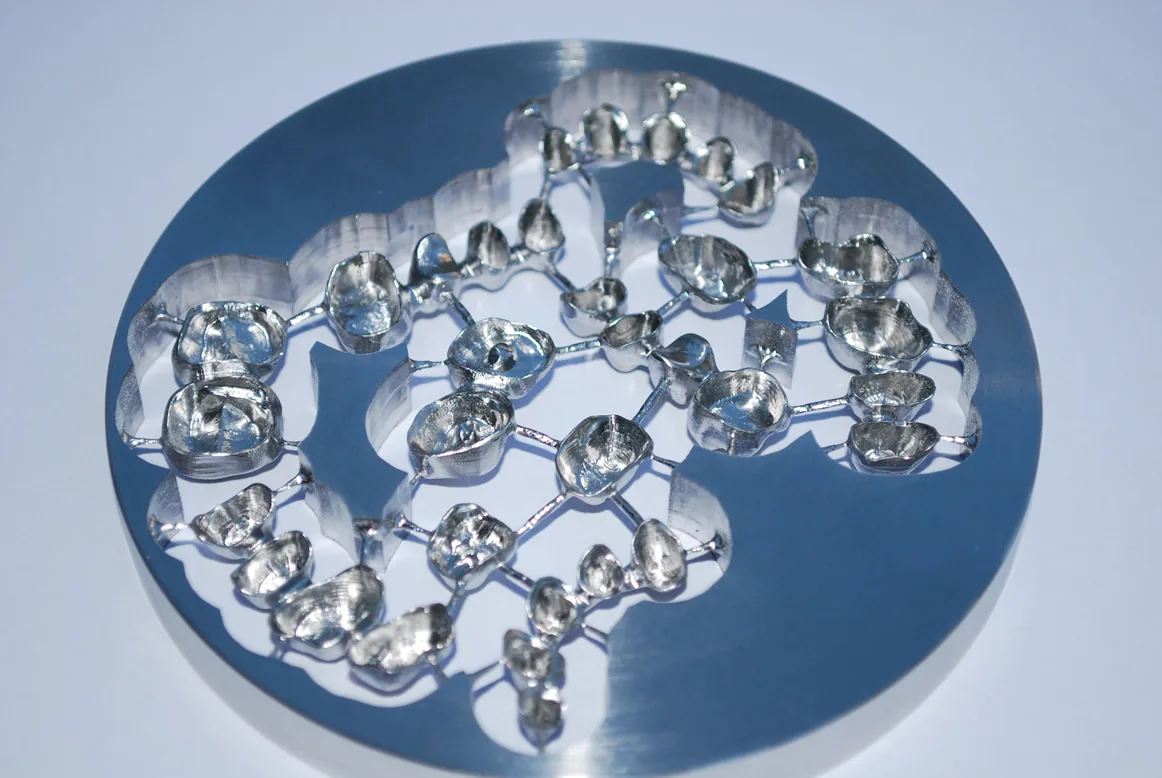
Image: Sescoi CAD/CAM · BY-SA 2.0 · Source
Missing just one tooth? Here's how a single tooth implant compares to a bridge, what the procedure actually involves, and what it typically costs.
What Is a Single Tooth Implant?
The implant itself is a small post, usually shaped like a screw, placed directly into the jawbone where your tooth root used to be. Over a period of months, your bone fuses to that post through a process called osseointegration. Once that's complete, a connector piece called an abutment attaches to the top of the implant, and a custom crown gets placed on top of the abutment. The result, from the outside, looks and functions like the tooth it replaced.
### Types of Single Tooth Implants
Most single tooth implants use a standard-width endosteal implant — the screw-shaped post placed directly into the bone — which is the typical choice when there's enough healthy bone available. In cases where the jawbone at the site is particularly narrow, a mini dental implant, which is noticeably thinner than a standard implant, is sometimes used instead, though this is less common for single-tooth replacement than for other applications like stabilizing a denture.
### Alternatives to a Single Tooth Implant
The two most common alternatives are a dental bridge, which uses the teeth on either side of the gap as anchors for a false tooth in between, and a removable partial denture, which is a removable appliance that replaces one or a few missing teeth without needing to touch the neighboring teeth at all, though it comes out at night and generally isn't as stable as either a bridge or an implant.
Single Tooth Implant vs. Bridge: Key Advantages
This is genuinely the core decision point for most people looking into single tooth implants, so it's worth spelling out clearly.
A traditional bridge requires the two teeth next to the gap to be shaped down — meaning healthy enamel is permanently removed — so they can support crowns that anchor the bridge in place. This means a bridge affects three teeth total to fix a problem with one. An implant, by contrast, doesn't touch the neighboring teeth at all. Those teeth stay exactly as they are.
There's also a difference in what happens underneath the gum over time. An implant, because it's anchored in the jawbone the way a natural tooth root is, helps preserve the bone in that area. A bridge sits above the gum and doesn't provide that same stimulation to the bone underneath the missing tooth, so some degree of bone loss in that specific spot can continue over time even after the bridge is placed.
On the other hand, a bridge is typically completed faster — often within a few weeks across two or three appointments — compared to an implant, which usually takes several months from placement to final crown due to the healing time bone needs to fuse around the implant. Bridges also sometimes cost less upfront, depending on the specific case, materials, and location, though implants often have a longer overall lifespan.
Neither option is universally "better." A lot of the decision comes down to the health of your neighboring teeth, how much you value avoiding altering healthy teeth, your timeline, and your budget.
Who Is a Candidate for a Single Tooth Implant?
Good candidates generally have enough healthy jawbone at the site of the missing tooth, healthy gums, and no uncontrolled health conditions that would significantly interfere with healing. As with any implant, factors like uncontrolled diabetes, heavy smoking, or untreated gum disease can affect candidacy, though none of these automatically rule someone out — they're simply things your dentist will want to evaluate and, where possible, manage before moving forward with surgery.
### When Are Single Tooth Implants Used?
Single tooth implants are typically used when one tooth has been lost to trauma, has failed despite root canal treatment, has fractured beyond repair, or was congenitally missing in the first place — meaning it never developed at all, which does happen for certain teeth, most commonly the lateral incisors near the front of the mouth. They're also sometimes used to replace a tooth that was previously extracted years earlier and left as an untreated gap.
The Single Tooth Implant Procedure
### Preparation
Before anything is placed, your dentist typically takes X-rays or a 3D scan to evaluate the bone at the implant site and plan exact placement. If the tooth in question hasn't been extracted yet, that usually needs to happen first, sometimes with a waiting period afterward to allow initial healing, though in some cases an implant can be placed at the same time as the extraction, depending on the specific situation and your dentist's assessment.
### Implant Placement
The implant post is placed into the jawbone under local anesthesia, usually a relatively quick procedure for a single implant compared to a multi-implant or full-arch case. A temporary crown or a removable option is sometimes provided during the healing period so you're not left with a visible gap.
### Placing the Abutment
Once the implant has fused with the bone — a process that generally takes a few months — a small connector piece called an abutment is attached to the top of the implant. Depending on your case, this might be done as a minor separate procedure or, in some approaches, placed at the same time as the implant itself.
### Getting the Crown
A custom crown, matched to the size, shape, and color of your natural teeth, is then attached to the abutment. This is generally the final step, and it's the point at which the whole process starts to look and feel complete.
### Recovery
Recovery from the initial placement surgery is typically similar to recovering from a tooth extraction — some soreness and mild swelling for several days, generally manageable with over-the-counter pain relief. The full healing period before the permanent crown can be placed is longer, generally measured in months rather than weeks, since the bone needs adequate time to properly fuse with the implant.
Possible Complications
Implant failure, where the bone doesn't properly integrate with the implant, is possible though not the norm. Infection at the surgical site can occur, as with any procedure involving an incision. There's a small risk of nerve irritation or numbness if an implant is placed very close to a nerve, particularly relevant for lower back teeth near the jaw's main nerve pathway. And for upper back teeth, there's a risk of the implant site being close to the sinus cavity, which is one reason imaging beforehand matters so much for precise planning.
Single Tooth Implant Cost
### Average Cost by Location
Cost for a single tooth implant, including the implant post, abutment, and crown, varies by region, provider experience, and the specific materials used. Costs in larger metropolitan areas or regions with a higher overall cost of living tend to run higher than in smaller towns, purely reflecting differences in practice overhead and local market rates, rather than necessarily reflecting differences in quality.
### Insurance Coverage
Dental insurance coverage for single tooth implants varies significantly by plan. Some plans cover a percentage of implant treatment as a major restorative procedure, while others may exclude implants specifically or only cover certain components, such as the crown but not the surgical placement. Calling your insurance provider directly and referencing the specific procedure codes your dentist plans to use is the most reliable way to understand your actual coverage before starting treatment.
### Financing Options
For people without insurance coverage for implants, or with only partial coverage, many dental practices offer in-house payment plans, and third-party financing options designed specifically for dental and medical expenses are widely available. A Health Savings Account or Flexible Spending Account, if you have access to one, can also be used toward implant costs since it's a qualified medical expense.
Is a Single Tooth Implant Worth the Investment?
For a lot of people, the answer comes down to how they weigh a higher upfront cost and longer timeline against the benefits of not altering healthy neighboring teeth and having a solution designed to last for decades with proper care. If you're someone who values keeping your other teeth completely untouched, and you're not in a rush to complete treatment quickly, an implant is often considered the stronger long-term investment. If cost or timeline are the deciding factors, a bridge remains a legitimate, well-established alternative worth discussing with your dentist.
Frequently Asked Questions About Single Tooth Implants
How long will your dental implant last? With good oral hygiene and regular dental checkups, the implant post itself often lasts decades, and many are designed to last a lifetime. The crown attached to it may eventually need replacement due to normal wear, typically after ten to fifteen years or so, which is a much smaller repair than replacing the entire implant.
How do you care for your dental implant? Caring for an implant is very similar to caring for a natural tooth — regular brushing, flossing around the implant site, and keeping up with routine dental checkups so your dentist can monitor the health of the gum and bone around it. There's no special daily routine beyond good general oral hygiene, though your dentist may recommend specific tools if you have other implants or dental work nearby that need extra attention.
How do dental implants feel compared to dentures or bridges? Most people describe an implant as feeling the closest to a natural tooth compared to other replacement options, since it's anchored in the bone rather than resting on the gum or relying on neighboring teeth. Unlike a removable denture, it doesn't come out or shift, and unlike a bridge, it doesn't put any load on the teeth next to it.
Can a single tooth implant be placed the same day the tooth is removed? Sometimes, depending on the condition of the socket and surrounding bone after extraction. In other cases, dentists prefer to wait for initial healing before placing the implant, to ensure the site is in the best possible condition for a stable, long-term result. This decision is made case by case based on your specific situation.
What happens if I wait too long to replace a missing tooth with an implant? The longer a gap goes untreated, the more likely the jawbone in that area is to gradually shrink from lack of stimulation, and neighboring teeth may start shifting into the empty space over time. This doesn't happen overnight, but waiting years can sometimes mean additional treatment, like a bone graft, becomes necessary before an implant can be placed.