
Dental Implants · 8 min read
Telescopic Dentures: The Double-Crown System Behind a Very Secure Fit
- Written by
- 1PleasantonDentist Editorial Team, Editorial team
- Reviewed by
- Editorial team
Image: Trohimenko YS · BY-SA 4.0 · Source
This less commonly discussed denture attachment method uses a two-part crown design that some patients find offers exceptional stability and retrievability.
What Is a Telescopic Denture System?
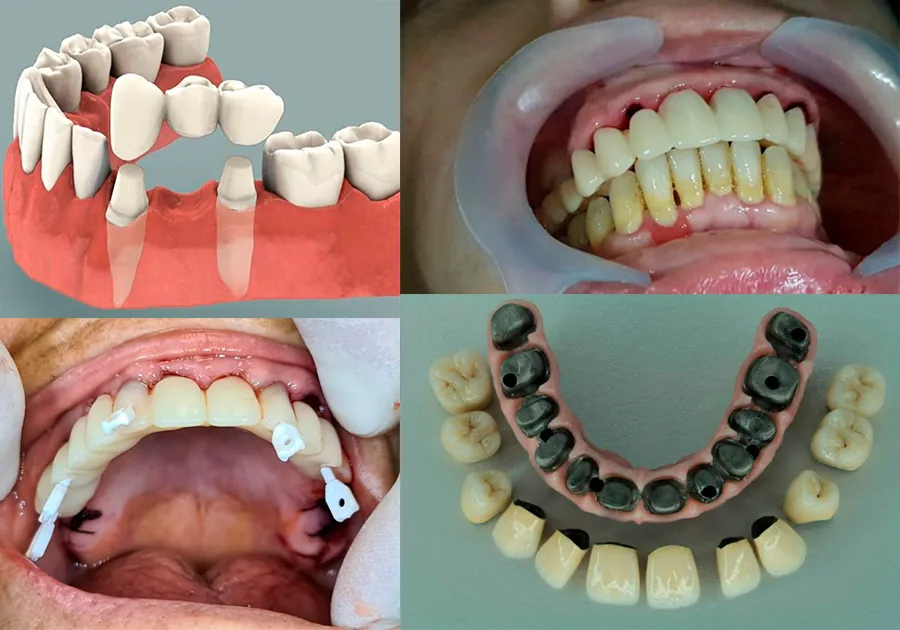
A telescopic denture uses a double-crown design, where an inner primary crown is permanently cemented onto a supporting tooth or implant, and an outer secondary crown, built into the removable denture itself, precisely fits over this inner crown like a cap, creating a friction-based connection that holds the denture securely in place.
Why Is It Called "Telescopic"?
This name reflects how the outer crown slides over and fits precisely around the inner crown, similar in concept to how sections of a telescope slide together, creating a snug, precisely fitted connection.
What Are the Advantages of This System?
Telescopic dentures can offer excellent retention and stability, a comfortable, precise fit given the close-tolerance engineering involved, and the ability for the patient to fully remove the denture for cleaning while still experiencing very secure retention during normal function.
How Is This Different From Traditional Clasps?
Traditional clasps grip around a tooth's visible surface using a hook-like mechanism, while telescopic crowns rely on the precise, snug fit between the inner and outer crown surfaces themselves, generally providing a different feel and, for well-made systems, often superior long-term retention compared to traditional clasps.
Is a Telescopic Denture More Complex to Fabricate Than a Standard Partial Denture?
Yes, this requires precise, exacting fabrication of both the inner and outer crown components to achieve the necessary close fit, generally making it a more technically demanding, involved process compared to a standard clasp-retained partial denture.
Can Telescopic Dentures Be Supported by Implants Instead of Natural Teeth?
Yes, this system can be used with either natural teeth or dental implants serving as the supporting structure for the inner crowns, offering flexibility depending on your specific remaining teeth and treatment plan.
Does This System Cost More Than Traditional Options?
Generally, yes, given the more involved, precise fabrication process required, telescopic dentures typically represent a higher cost compared to standard clasp-retained partial dentures.
Is a Telescopic Denture a Common Choice in the United States?
This system has historically been more prominently used in certain other countries, particularly parts of Europe, and while available and used in the United States as well, it's generally less commonly encountered here compared to more standard clasp or implant-attachment approaches.
Who Might Be a Good Candidate for a Telescopic Denture?
People specifically prioritizing exceptional retention and a precise fit, who have suitable supporting teeth or implants available, and who are willing to invest in the more involved fabrication process, are reasonable candidates for this specialized approach.
Can Existing Teeth Be Used for the Inner Crowns, or Do They Need to Be Artificially Prepared?
The teeth serving as anchors typically need to be prepared and fitted with the inner primary crown, similar in concept to preparing a tooth for any crown, meaning this involves permanently altering those specific supporting teeth as part of the system.
Should You Ask Your Dentist Specifically About This Option if Considering a Partial Denture?
Yes, since this isn't the default option at every practice, and not every dentist has extensive experience with this specific system, asking directly if you're interested in exploring this approach, and potentially seeking a provider or prosthodontist with specific telescopic denture experience, is a reasonable step.