Dental Implants · 8 min read
Titanium vs. Zirconia Dental Implants: A Material Comparison
- Written by
- 1PleasantonDentist Editorial Team, Editorial team
- Reviewed by
- Editorial team
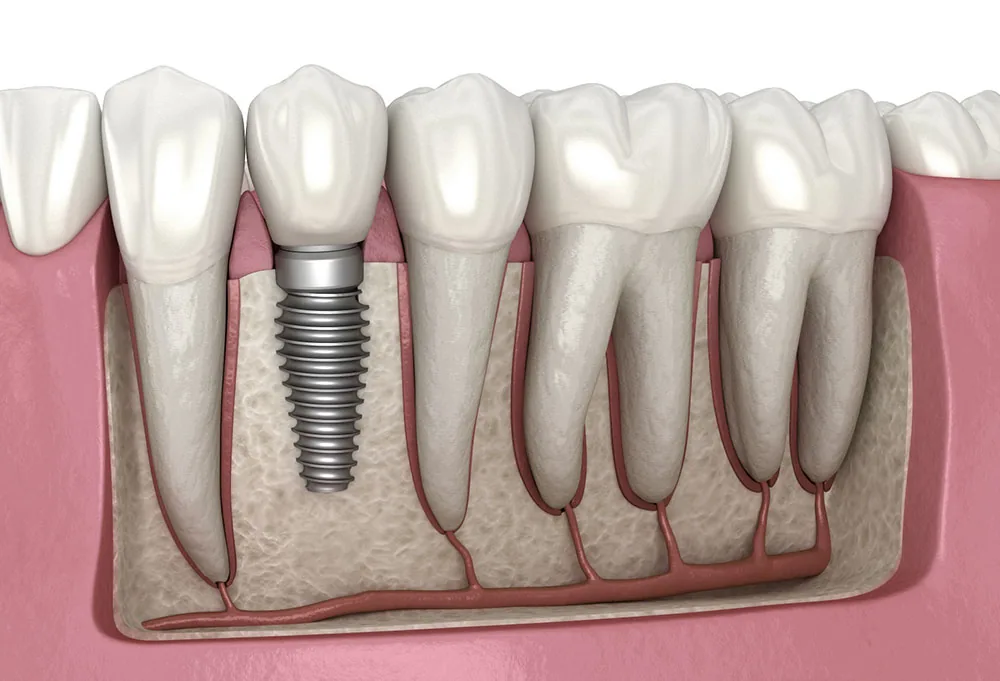
Image: Alexmit art · BY-SA 4.0 · Source
One is metal, one isn't — but that's not the only difference. Here's an honest comparison of titanium and zirconia dental implants.
Titanium Implants: The Established Standard
Titanium has been used in dental implants for decades and remains the most common material by a wide margin. It's biocompatible, meaning the body generally accepts it without rejection, and it has a long, extensively documented track record of successfully fusing with bone through osseointegration.
Zirconia Implants: The Metal-Free Alternative
Zirconia is a ceramic material, offering a metal-free option for people who specifically want to avoid metal in their implant. It's white in color all the way through, rather than the grayish tone of titanium, which can matter for people with thin gum tissue where a titanium post might create a subtle shadow near the gumline.
Strength and Durability Comparison
Both materials are considered strong and durable for implant use, with titanium having the more extensive long-term research and clinical history behind it. Zirconia has a growing but comparatively shorter track record, though it's increasingly used and well-regarded in appropriate cases.
Osseointegration Comparison
Titanium's ability to fuse with bone is extremely well documented, being the material Brånemark originally studied when developing modern dental implant techniques decades ago. Zirconia also demonstrates good osseointegration in research and clinical use, though with a smaller overall body of long-term data compared to titanium's decades-long history.
Aesthetic Differences
Zirconia's white color can be an advantage for patients with thin, translucent gum tissue where a titanium implant post might show a slight gray tint through the gum. For patients with thicker gum tissue, this consideration is less relevant, since the gum adequately masks either material.
Who Might Prefer Zirconia?
People specifically concerned about having metal in their body, whether due to a metal sensitivity, a personal preference for metal-free dental work, or specific aesthetic concerns about thin gum tissue, often gravitate toward zirconia as their preferred option.
Who Might Prefer Titanium?
People prioritizing the most extensively studied, longest-track-record option, or whose specific case benefits from titanium's particular mechanical properties, which can sometimes offer more flexibility in implant design for certain complex cases, often choose titanium, which remains the default recommendation for most standard cases.
Cost Differences
Zirconia implants are sometimes priced somewhat higher than titanium, reflecting the material and manufacturing process, though this varies by provider and specific product line rather than being a fixed, universal price gap.
Are Metal Allergies to Titanium Common?
True titanium allergies are considered uncommon, though not impossible, and if you have a known metal sensitivity or allergy, discussing this directly with your dentist or oral surgeon before choosing an implant material is a reasonable and important step in your treatment planning.
Does One Material Integrate Faster Than the Other?
Both materials generally require a similar overall healing timeframe for the bone to properly fuse with the implant, generally measured in months, without one material being clearly established as faster than the other in typical cases.