Dental Implants · 8 min read
Zygomatic Implants: The Option When There's Not Enough Jawbone Left
- Written by
- 1PleasantonDentist Editorial Team, Editorial team
- Reviewed by
- Editorial team
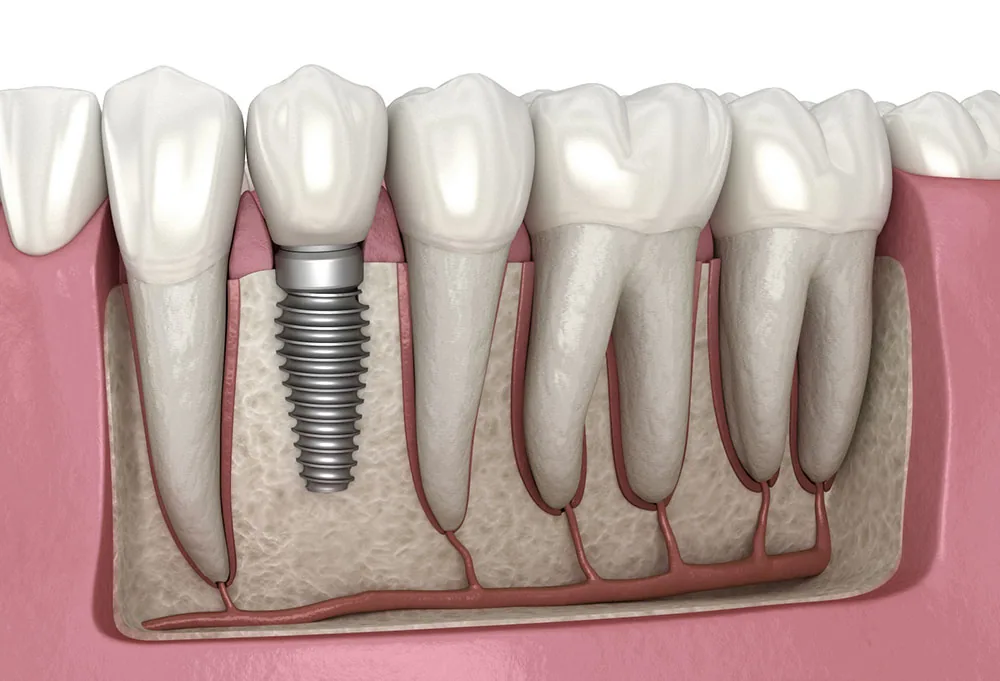
Image: Alexmit art · BY-SA 4.0 · Source
For patients with severe upper jaw bone loss, zygomatic implants anchor into the cheekbone instead. Here's how this advanced technique actually works.
What Are Zygomatic Implants?
Zygomatic implants are significantly longer than standard dental implants, designed to anchor not into the upper jawbone itself, but into the zygomatic bone, the cheekbone, which is typically much denser and less affected by the bone loss that commonly occurs in the upper jaw after long-term tooth loss.
Who Is a Candidate for Zygomatic Implants?
This approach is generally reserved for patients with severe upper jaw bone loss significant enough that standard implants, even combined with bone grafting, aren't a viable or reasonable option, making zygomatic implants a specific solution for a genuinely more limited, complex patient population.
How Is This Different From Standard Implants With Bone Grafting?
Standard implants, even with grafting, still rely on the jawbone itself as the anchoring foundation, requiring adequate graft healing and integration first. Zygomatic implants bypass the compromised jawbone entirely, anchoring into the cheekbone instead, which can sometimes avoid the need for extensive grafting and its associated longer healing timeline in these severe bone-loss cases.
What Does the Zygomatic Implant Procedure Involve?
This is a more complex surgical procedure than standard implant placement, typically performed by an oral and maxillofacial surgeon with specific training and experience in this technique, involving careful, precise placement of the longer implants through the upper jaw and into the cheekbone, guided by detailed imaging and planning.
Can Zygomatic Implants Support a Full Arch of Teeth?
Yes, this technique is commonly used specifically to support a full upper arch of replacement teeth, often combined with a smaller number of standard implants in areas where adequate jawbone remains, working together to support the complete restoration.
Is Same-Day Restoration Possible With Zygomatic Implants?
In many cases, yes, given the strong initial stability zygomatic implants achieve by anchoring into denser cheekbone, a temporary full-arch restoration can often be attached the same day as surgery, similar in concept to same-day approaches used with standard implants in appropriate cases.
What Are the Risks Specific to Zygomatic Implants?
Given the more complex surgical technique and the specific anatomy involved, risks can include those relevant to any implant procedure, along with some specific considerations related to the cheekbone and surrounding sinus and facial structures, which is exactly why this procedure requires a surgeon with specific training and experience in this particular technique.
How Does Recovery Compare to Standard Implants?
Recovery involves a more significant initial surgical procedure than standard implant placement, generally with a correspondingly longer initial recovery period, though the overall treatment timeline can potentially be shorter than a path involving extensive bone grafting and its associated healing time before standard implants could even be placed.
Is Zygomatic Implant Treatment More Expensive?
Given the specialized surgical technique, the experience level required of the surgeon, and the complexity of the cases this approach addresses, zygomatic implant treatment is generally more costly than standard implant treatment, reflecting the significantly more involved nature of the procedure.
How Do You Find a Surgeon Experienced in Zygomatic Implants?
This is a specialized technique not offered by every oral surgeon, meaning seeking a provider with specific documented training and case experience in zygomatic implants, sometimes requiring travel to a surgeon with this particular expertise, is an important part of pursuing this treatment safely and effectively.
Are There Alternatives to Zygomatic Implants for Severe Bone Loss?
Extensive bone grafting to rebuild the jaw before standard implant placement is one alternative, though this involves a considerably longer overall treatment timeline. In some cases, a well-fitted denture, potentially implant-supported using whatever standard implants can be placed in remaining bone, may also be discussed as an alternative approach depending on the specific situation.