Rare Conditions and Genetics · 8 min read
Fibrous Dysplasia of the Jaw: A Different Kind of Bone Growth Condition
- Written by
- 1PleasantonDentist Editorial Team, Editorial team
- Reviewed by
- Editorial team
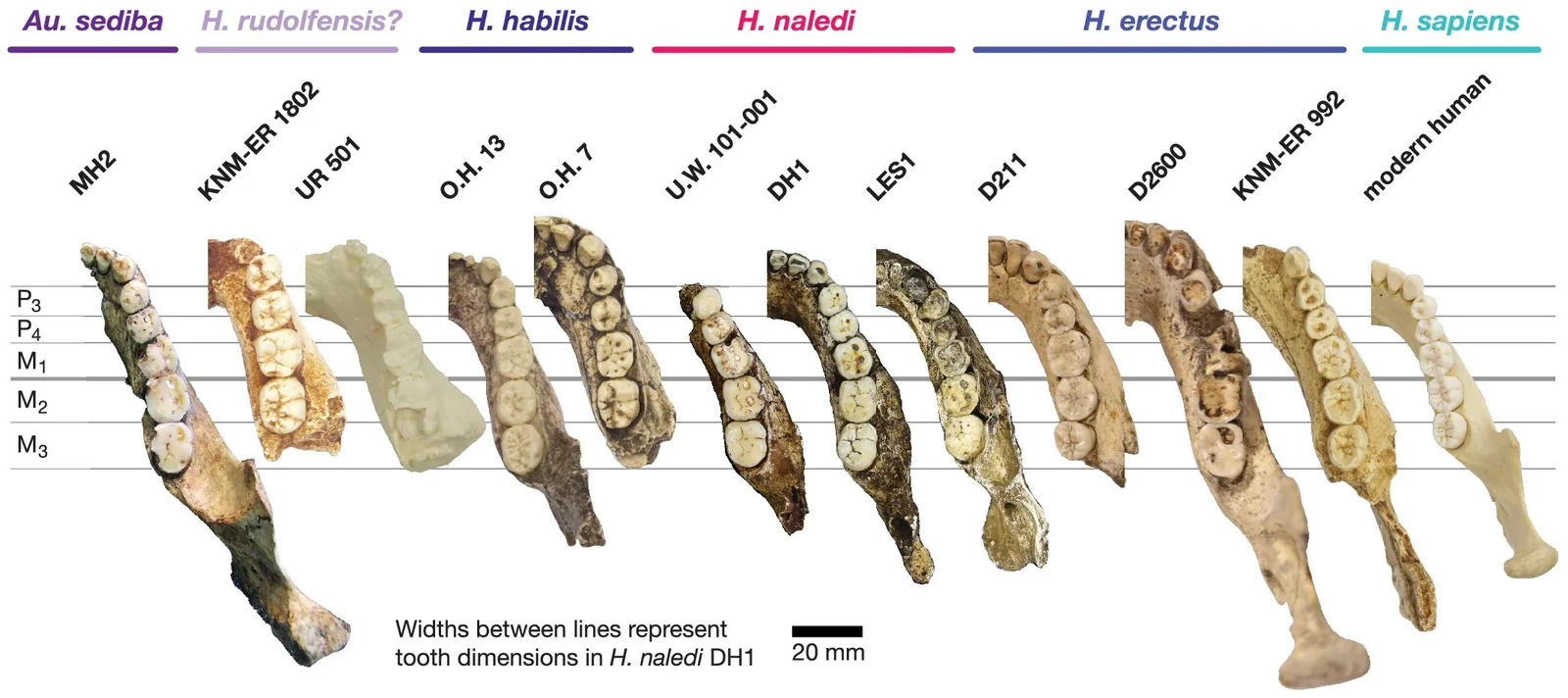
Image: John Hawks, Marina Elliott, Peter Schmid, Steven E. Churchill, Darryl J. de Ruiter, Eric M. Roberts, Hannah Hilbert-Wolf, Heather M. Garvin, Scott A. Williams, Lucas K. Delezene, Elen M. Feuerriegel, Patrick Randolph-Quinney, Tracy L. Kivell, Myra F. Laird, Gaokgatlhe Tawane, Jeremy M. DeSilva, Shara E. Bailey, Juliet K. Brophy, Marc R. Meyer, Matthew M. Skinner, Matthew W. Tocheri, Caroline VanSickle, Christopher S. Walker, Timothy L. Campbell, Brian Kuhn, Ashley Kruger, Steven Tucker, Alia Gurtov, Nompumelelo Hlophe, Rick Hunter, Hannah Morris, Becca Peixotto, Maropeng Ramalepa, Dirk van Rooyen, Mathabela Tsikoane, Pedro Boshoff, Paul H.G.M. Dirks, Lee R. Berger · BY 4.0 · Source
This bone condition causes normal jawbone to be gradually replaced with fibrous tissue, typically affecting just one side and often stabilizing with age.
What Is Fibrous Dysplasia?
Fibrous dysplasia is a condition where normal bone is gradually replaced by abnormal, weaker fibrous tissue, which can affect one or multiple bones in the body, including the jaw, causing gradual swelling and bone changes in the affected area.
Does Fibrous Dysplasia Typically Affect One Side or Both Sides of the Jaw?
Unlike cherubism, which characteristically affects both sides of the jaw symmetrically, fibrous dysplasia of the jaw most commonly affects just one side, which is actually a useful distinguishing clinical feature between these two conditions.
Is Fibrous Dysplasia Genetic, Similar to Cherubism?
This is another key difference — fibrous dysplasia generally isn't inherited the same straightforward way cherubism is, instead resulting from a genetic change that occurs after conception rather than being passed down from a parent, meaning it typically isn't something that runs in families the way cherubism does.
Can Fibrous Dysplasia Affect Bones Beyond the Jaw?
Yes, this varies by the specific type — some cases affect just one bone (monostotic), which is the more common pattern when the jaw is involved, while other cases affect multiple bones throughout the body (polyostotic), sometimes as part of a broader syndrome.
What Are the Symptoms of Jaw Fibrous Dysplasia?
Gradual, painless swelling of the affected side of the jaw, sometimes causing noticeable facial asymmetry, and in some cases, effects on nearby tooth position or eruption, are common features.
At What Age Does Jaw Fibrous Dysplasia Typically Develop?
This often becomes apparent during childhood or adolescence, with the affected area sometimes continuing to grow during these active growth years.
Does Fibrous Dysplasia Stabilize Over Time, Similar to Cherubism?
Yes, this is a similarly reassuring pattern — fibrous dysplasia often slows its growth and tends to stabilize after puberty, though unlike cherubism's tendency toward more noticeable improvement, fibrous dysplasia more commonly stabilizes at its current size rather than significantly shrinking afterward.
How Is Fibrous Dysplasia Diagnosed?
Imaging, including X-rays and often a CT scan, showing the characteristic bone changes, combined with biopsy to confirm the specific tissue pattern, provides the diagnosis, and additional evaluation may be recommended to check whether other bones are involved, particularly if the polyostotic pattern is suspected.
Is Fibrous Dysplasia Cancerous?
No, this is a benign condition, though ongoing monitoring remains important given its potential for continued growth during active phases and its effect on surrounding structures.
How Is Fibrous Dysplasia of the Jaw Treated?
Management often involves careful, ongoing monitoring, particularly given the tendency toward stabilization after puberty, with surgical recontouring considered for cases causing significant cosmetic concern or functional problems, typically once the condition has stabilized.
Should Someone With Suspected Jaw Fibrous Dysplasia Be Evaluated for Involvement Elsewhere in the Body?
Yes, particularly given the possibility of the polyostotic pattern affecting multiple bones, and in some cases, additional associated features, a thorough medical evaluation beyond just the jaw finding is a reasonable, important part of comprehensive assessment.