
Orthodontics · 8 min read
Invisalign vs. Braces: A Direct Comparison for Making Your Decision
- Written by
- 1PleasantonDentist Editorial Team, Editorial team
- Reviewed by
- Editorial team
Image: Panadda Niranatlumpong et al. · BY 3.0 · Source
Both straighten teeth, but Invisalign and braces work very differently day to day. Here's a direct, practical comparison to help you decide.
How They Work Differently
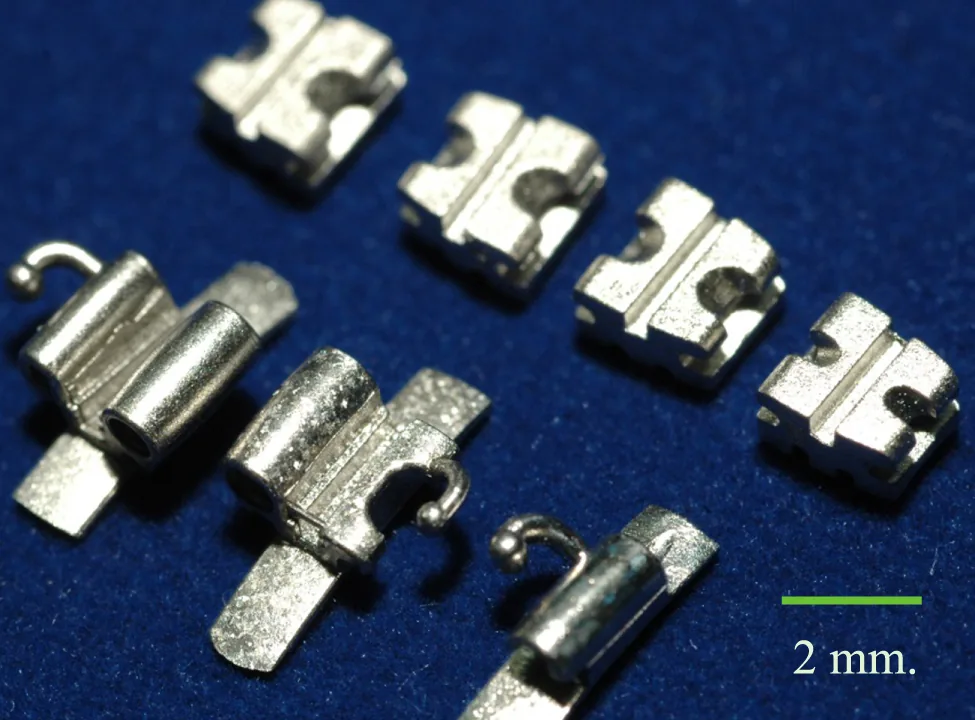
Braces use fixed brackets bonded to your teeth, connected by a wire that applies continuous, unremovable pressure, adjusted periodically by your orthodontist. Invisalign uses a series of removable, custom-made clear aligner trays, each slightly different from the last, worn in sequence to gradually shift your teeth, with pressure only applied while the tray is actually in your mouth.
Visibility
Invisalign is far less noticeable, since the clear trays are much harder to spot than traditional metal brackets and wires. This is one of the most commonly cited reasons adults specifically choose Invisalign over braces.
Effectiveness for Complex Cases
Traditional braces generally handle more complex tooth movements and significant bite corrections more predictably, since the fixed wire applies continuous force regardless of patient behavior. Invisalign works well for mild to moderate cases but can be less reliable for more severe crowding or complicated bite issues, where braces are often still recommended as the more dependable option.
Daily Commitment Required
Braces don't require any daily decision-making, since they're fixed in place and always working. Invisalign requires real discipline — trays need to be worn twenty to twenty-two hours a day to stay on track, and it's genuinely easy to fall short of this without realizing how much it's slowing your treatment.
Eating and Diet
Braces come with specific food restrictions — no hard, sticky, or very chewy foods that could damage brackets or wires. Invisalign has no food restrictions at all, since you remove the trays before eating and put them back in afterward.
Oral Hygiene During Treatment
Cleaning around braces requires extra tools like floss threaders or interdental brushes to navigate around brackets and wires. Invisalign makes hygiene simpler, since you remove the trays to brush and floss exactly as you normally would.
Comfort
Many people find Invisalign more comfortable day to day, without the bracket and wire irritation some experience with braces, though both options cause some temporary discomfort when adjusting to a new wire tightening or a new aligner tray in the series.
Treatment Time
Treatment length varies by case complexity for both options rather than one being consistently faster than the other, though very mild cases sometimes see faster results with Invisalign specifically due to its design for straightforward corrections.
Cost
Both are often priced in a similar general range, with the actual cost for either driven more by case complexity than by which specific method is used.
Which Should You Choose?
If you have significant crowding, a complex bite issue, or you're not confident you'll consistently wear removable trays as directed, traditional braces are often the more reliable choice. If your case is mild to moderate, you value discretion, and you're confident in your ability to stick to the wear schedule, Invisalign is a legitimate, well-established option worth pursuing.
Frequently Asked Questions About Invisalign vs. Braces
Can my orthodontist tell me definitively which option is better for my case? Yes, after a thorough evaluation including imaging, your orthodontist can tell you honestly whether your specific case is well suited to Invisalign or whether traditional braces would achieve a more reliable result, rather than leaving this purely as a matter of personal preference.
Is Invisalign just as effective as braces if I wear it consistently? For appropriate cases, yes, consistent wear is the key factor in Invisalign achieving results comparable to braces. The treatment's effectiveness depends heavily on actually following the recommended wear schedule.
Do adults typically choose Invisalign more than braces? Invisalign has become notably popular among adults specifically due to its discretion and lack of dietary restrictions, both of which matter more to many working adults than to younger patients, though plenty of adults still choose or need traditional braces depending on their specific case.
Can I switch from braces to Invisalign partway through treatment, or vice versa? This is possible in some cases, depending on where you are in treatment and your orthodontist's assessment, though it's not always a straightforward switch and depends on your specific progress and remaining treatment needs.
Which option has a higher risk of not working as planned? Invisalign's biggest risk factor is inconsistent wear, since results depend directly on following the schedule. Braces don't carry this same compliance risk since they're fixed in place, though poor oral hygiene during braces treatment carries its own risks like increased cavity or gum disease likelihood.