
Orthodontics · 8 min read
Invisalign vs. Braces: A Real, Side-by-Side Comparison
- Written by
- 1PleasantonDentist Editorial Team, Editorial team
- Reviewed by
- Editorial team
Image: Tamaki Sono · BY 2.0 · Source
Both straighten teeth, but they work completely differently. Here's an honest, detailed comparison to help you and your orthodontist decide.
How Each Option Actually Moves Teeth
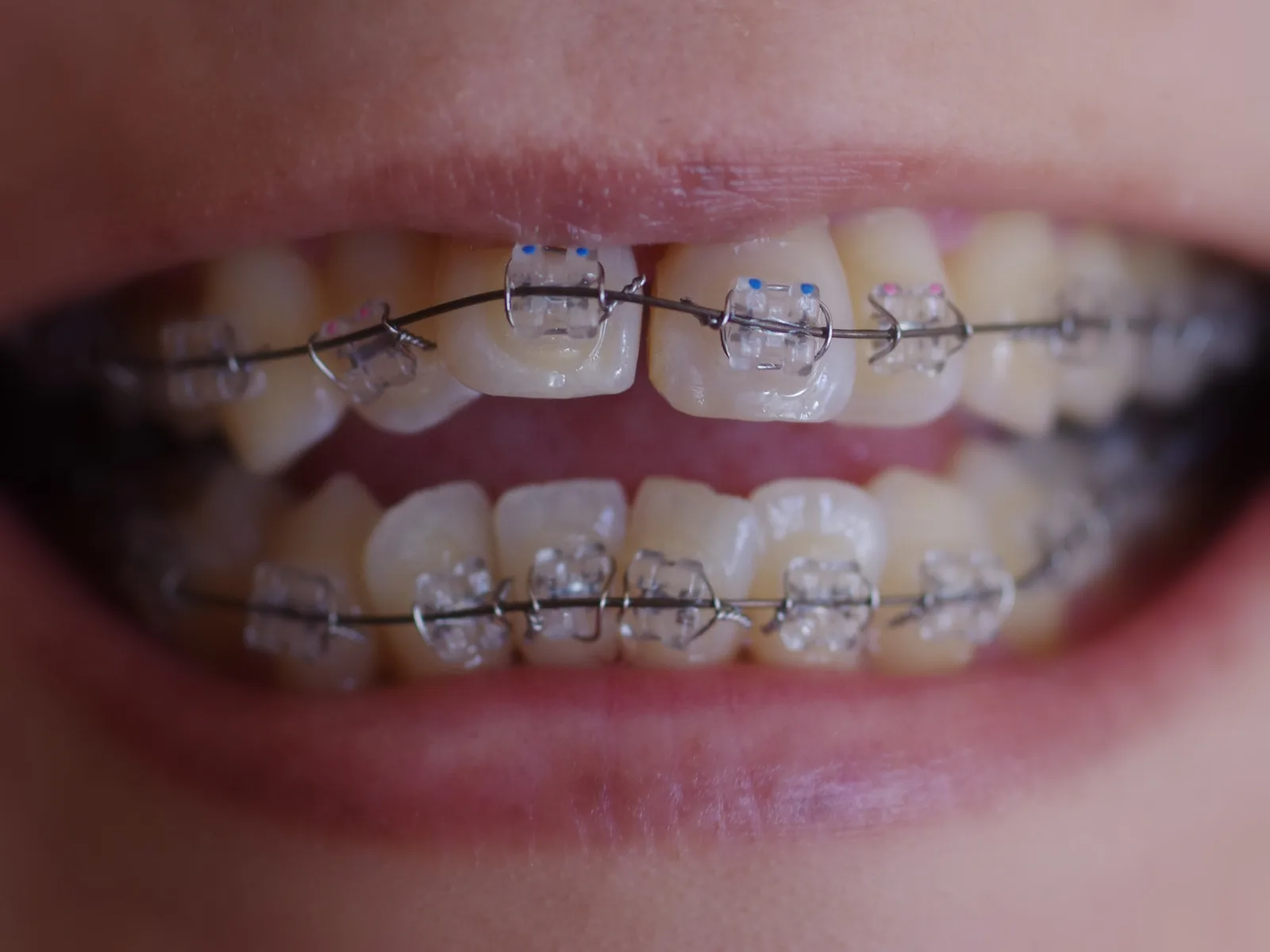
Traditional braces use brackets bonded to your teeth, connected by a wire that applies continuous, unremovable pressure, gradually shifting teeth into position over the course of treatment. Invisalign uses a series of custom, removable clear plastic trays, each slightly different from the last, worn in sequence to guide teeth toward the same kind of end result, but through a fundamentally different, tray-by-tray mechanism.
Visibility and Appearance
This is the most obvious difference and often the deciding factor for a lot of people. Traditional metal braces are clearly visible. Invisalign trays are nearly invisible when worn, which is a significant factor for adults in professional settings or anyone self-conscious about visible orthodontic treatment during the process.
Comfort Day to Day
Braces can cause irritation to the inside of the cheeks and lips, particularly in the first few weeks, and each wire adjustment typically brings a few days of soreness. Invisalign trays are generally described as more comfortable overall, without the same risk of a wire poking or a bracket rubbing, though some people experience mild pressure discomfort when switching to each new tray in the series.
Eating and Cleaning
With braces, certain foods — sticky, hard, or chewy items — need to be avoided to prevent damaging the brackets or wire, and cleaning requires extra tools like floss threaders to get under the wire. With Invisalign, since the trays are removed for eating, there are no food restrictions at all, and you brush and floss normally without navigating hardware.
Effectiveness for Different Cases
Traditional braces generally handle a wider range of complexity more predictably, since the continuous, non-removable force doesn't depend on patient compliance the way removable trays do. Invisalign works well for mild to moderate crowding, gaps, and certain bite issues, but more severe misalignment or complex bite corrections are often still better suited to traditional braces, or sometimes a combination approach.
The Compliance Factor
This is genuinely one of the biggest practical differences. Braces work continuously regardless of what you do, since they're fixed in place. Invisalign only works if you actually wear the trays for the recommended twenty to twenty-two hours a day — every hour spent out of the trays for something other than eating or cleaning is an hour your treatment isn't progressing. This makes Invisalign more dependent on personal discipline than braces are.
Treatment Time Comparison
Treatment time depends more on the complexity of your specific case than on which method is used, though for comparable cases, timelines are often broadly similar, generally ranging from several months to a couple of years. Inconsistent Invisalign wear can extend treatment time beyond the original estimate in a way that braces, being non-removable, generally aren't as susceptible to.
Appointment Frequency
Braces typically require adjustment appointments every four to eight weeks throughout treatment. Invisalign appointments are often somewhat less frequent, since you're generally given multiple tray sets to progress through between visits, though this varies by provider and treatment plan.
Cost Comparison
Cost for both options varies significantly by case complexity, provider, and location, and it's not accurate to assume one is universally cheaper than the other. Comparing actual quotes for your specific case from an orthodontist who can evaluate both options is more useful than assuming a fixed price difference exists between the two categories generally.
Who Should Choose Braces?
People with more complex misalignment or bite issues, younger patients where compliance with a removable appliance may be less reliable, and anyone who prefers a fixed solution that doesn't depend on remembering to wear something consistently, are often better suited to traditional braces based on their orthodontist's evaluation.
Who Should Choose Invisalign?
Adults and older teens with mild to moderate misalignment, people concerned about visible orthodontic treatment for professional or personal reasons, and anyone confident in their ability to consistently wear removable trays for the required hours each day are often good candidates for Invisalign, assuming their specific case is suited to it.
Can You Switch Between the Two Mid-Treatment?
In some cases, yes, particularly if Invisalign isn't achieving the planned progress and your orthodontist recommends switching to braces to complete treatment more predictably. This isn't a common need for well-suited cases, but it's not unheard of, and it's a reasonable question to ask upfront about how your orthodontist would handle this scenario if it applied to you.