
Orthodontics · 8 min read
Self-Ligating Braces vs. Traditional Braces: What the Mechanism Difference Means
- Written by
- 1PleasantonDentist Editorial Team, Editorial team
- Reviewed by
- Editorial team
Image: MAKY.OREL · BY-SA 3.0 · Source
Self-ligating braces skip the elastic ties entirely. Here's how that specific mechanical difference actually affects your treatment experience.
How Traditional Braces Hold the Wire
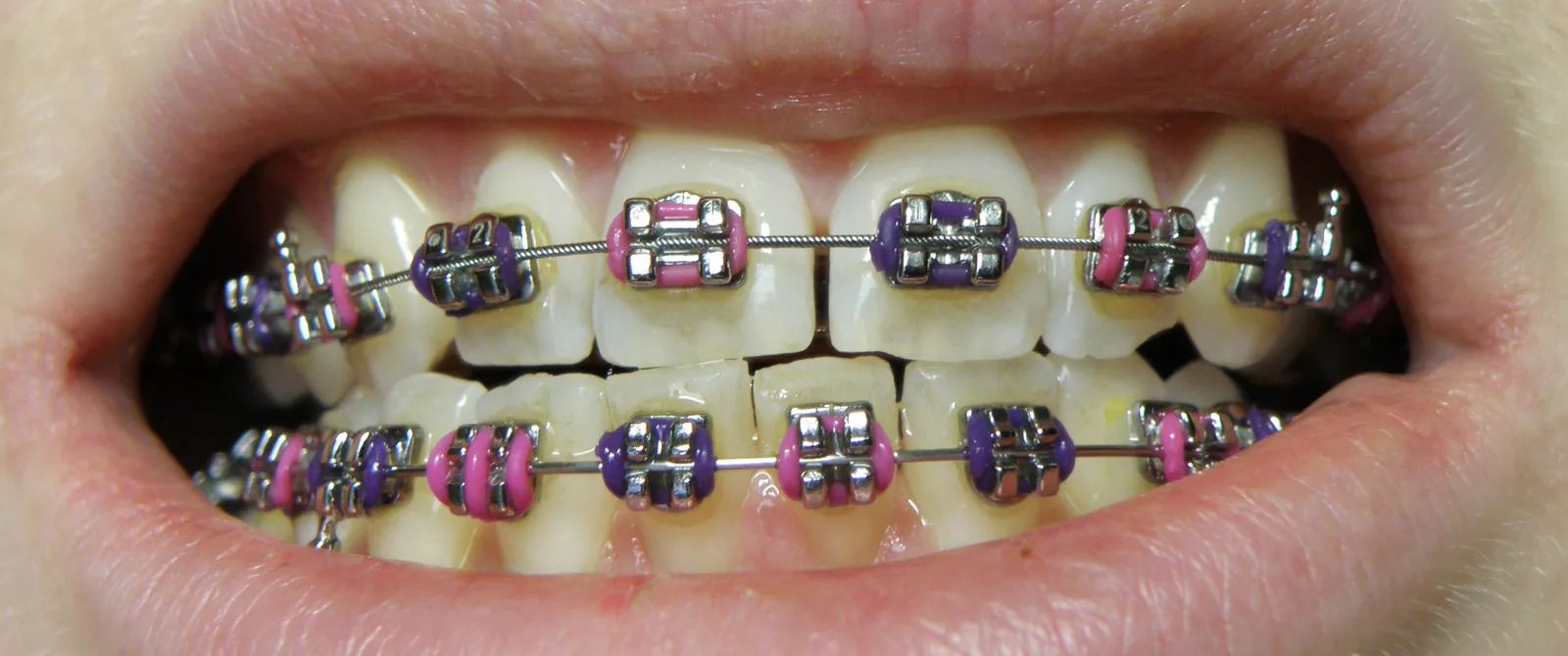
Traditional braces use small elastic or metal ties, wrapped around each individual bracket, to hold the archwire securely in place, requiring these ties to be replaced or adjusted at each orthodontic appointment as part of the wire adjustment process.
How Self-Ligating Braces Hold the Wire
Self-ligating braces use a built-in clip or door mechanism on each bracket itself to hold the wire in place, eliminating the need for separate elastic or metal ties entirely, and allowing the wire to be more easily inserted or adjusted at each visit.
Does This Difference Affect Treatment Effectiveness?
Both systems are well-established, effective ways to move teeth, and research comparing overall treatment outcomes between the two hasn't shown a dramatic, consistent difference in final results for most cases, meaning effectiveness is broadly comparable across appropriate cases for either system.
Does Self-Ligating Mean Shorter Treatment Time?
This has been marketed as a benefit of self-ligating systems, and some studies do suggest modestly shorter treatment time or fewer appointments in certain cases, though results across research aren't entirely consistent, and treatment time still depends significantly on your specific case complexity regardless of bracket type.
Are Self-Ligating Braces More Comfortable?
Some patients report reduced friction and slightly less discomfort with self-ligating systems, related to how the wire can move more freely within the bracket mechanism, though individual comfort experiences vary, and traditional braces are also generally well-tolerated by most patients.
Does Self-Ligating Mean Fewer Adjustment Appointments?
Some orthodontists do space out appointments slightly further apart for self-ligating cases, given the reduced need for retying at each visit, though this varies by provider and specific treatment plan rather than being a universal, fixed difference.
Is Cleaning Easier With Self-Ligating Braces?
The absence of separate elastic ties, which can sometimes trap more food debris and are occasionally a source of visible staining, is sometimes cited as making self-ligating brackets somewhat easier to keep clean, though both systems still require the same diligent brushing and flossing technique around brackets and wires.
Does Self-Ligating Cost More Than Traditional Braces?
Often, yes, self-ligating brackets are generally priced somewhat higher than traditional brackets, reflecting the more complex bracket mechanism, though the exact price difference varies by provider and specific case.
Are Self-Ligating Braces Available in Ceramic or Only Metal?
Both metal and ceramic (tooth-colored) self-ligating bracket options are available, similar to how traditional braces offer both material choices, giving patients interested in a less visible option a self-ligating choice as well if that's a priority.
Which System Do Most Orthodontists Recommend?
This often comes down to individual orthodontist preference and experience, along with your specific case's needs, rather than one system being universally recommended over the other for every patient, making it a reasonable topic to discuss directly with your orthodontist during treatment planning.
Can You Choose Between the Two Systems Yourself?
To a meaningful degree, yes, particularly since both are effective, well-established options for most standard cases, though your orthodontist's recommendation based on your specific bite and any particular complexities of your case should still factor into the final decision.