
Restorative Dentistry · 8 min read
Cantilever Bridge: When Only One Neighboring Tooth Can Support the Replacement
- Written by
- 1PleasantonDentist Editorial Team, Editorial team
- Reviewed by
- Editorial team
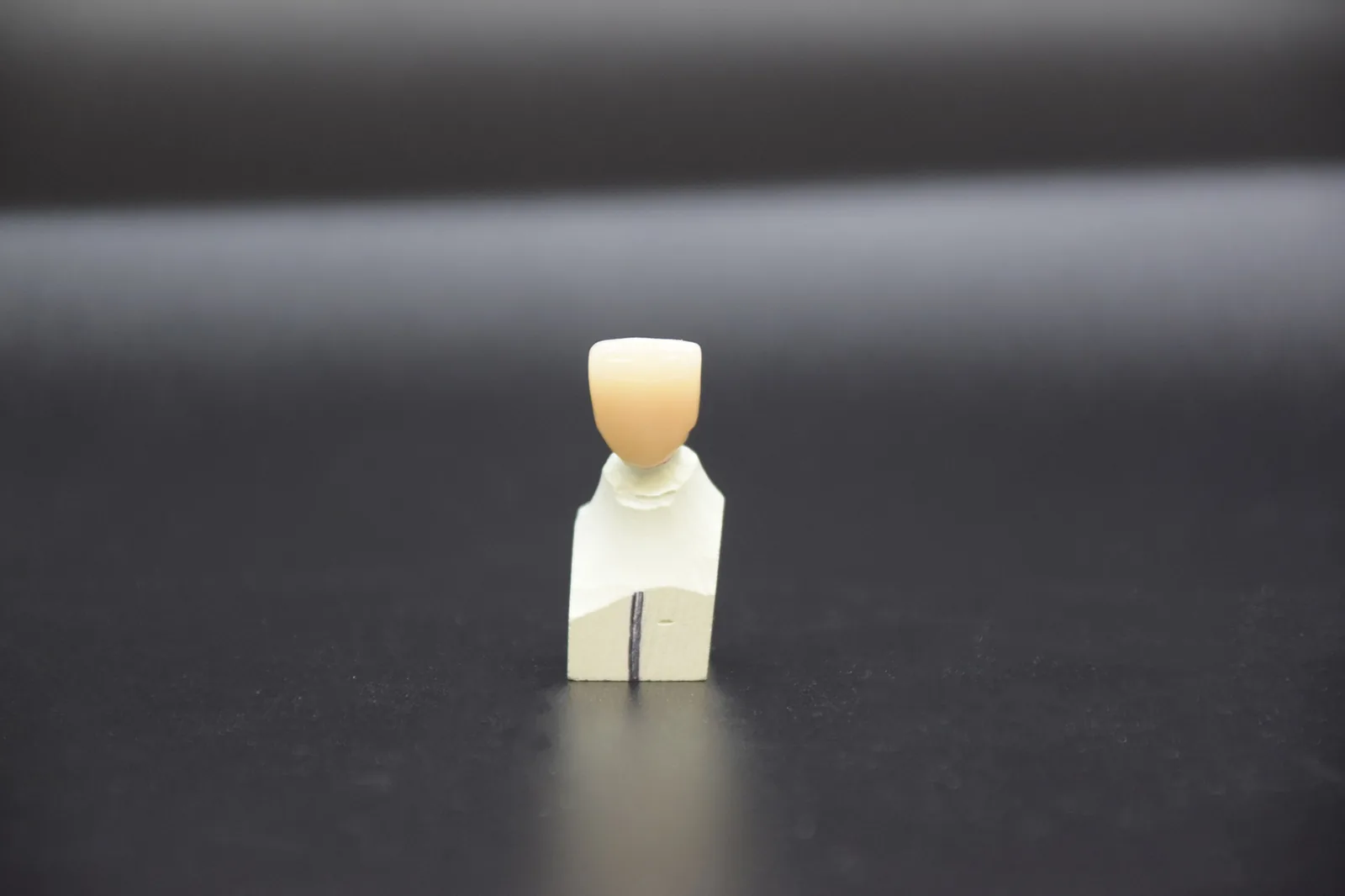
Image: James Roback, UticaDentalLab · BY-SA 4.0 · Source
This bridge type anchors from just one side, making it a specific solution for a specific anatomical situation rather than a first-choice option.
What Is a Cantilever Bridge?
A cantilever bridge replaces a missing tooth using a false tooth supported by a crown on only one adjacent natural tooth, rather than anchoring from teeth on both sides of the gap the way a traditional bridge does.
Why Would Only One Side Be Available for Support?
This situation arises when there's only one healthy, suitable tooth adjacent to the gap, such as when a missing tooth is at the very end of a dental arch with no tooth positioned behind it, or when the tooth on one side isn't suitable to serve as an anchor for other reasons.
Is a Cantilever Bridge as Strong as a Traditional Bridge?
Generally, no — supporting a false tooth from only one side places different, often more concentrated stress on that single supporting tooth compared to the more evenly distributed support a traditional two-sided bridge provides, making cantilever bridges generally considered somewhat less ideal from a purely biomechanical standpoint.
When Is a Cantilever Bridge Actually a Reasonable Choice?
This is typically considered specifically when other options aren't feasible or appropriate for the specific situation, such as when there's genuinely no suitable tooth on one side, or when the specific location involves relatively lower bite forces where the added stress is less of a practical concern.
What Are the Risks Specifically Associated With Cantilever Bridges?
The single supporting tooth carries the entire biting load from the replacement tooth, which can potentially increase the risk of that supporting tooth becoming loose, experiencing increased wear, or facing other complications over time compared to a more evenly supported traditional bridge.
Are Cantilever Bridges More Commonly Used for Front or Back Teeth?
This is more commonly and appropriately used for front teeth, given their generally lower bite forces, making the single-tooth support arrangement a more reasonable, lower-risk choice in this location compared to the higher forces involved with back teeth.
Are There Alternatives to a Cantilever Bridge When Two-Sided Support Isn't Available?
Yes, a dental implant is often a genuinely preferable alternative in situations where a cantilever bridge might otherwise be considered, since an implant doesn't rely on a natural tooth for support at all, avoiding the added stress concern entirely.
Why Might Someone Still Choose a Cantilever Bridge Over an Implant?
Cost considerations, a desire to avoid surgery, or specific anatomical factors making implant placement less straightforward in a particular case are reasons someone and their dentist might still consider a cantilever bridge as the more practical option for their specific situation.
How Long Does a Cantilever Bridge Typically Last?
This varies by individual bite forces and location, but given the added stress on the single supporting tooth, cantilever bridges are sometimes considered to have a somewhat less predictable long-term outlook compared to traditional bridges, making regular monitoring by your dentist particularly relevant.
How Is a Cantilever Bridge Placed?
The process is generally similar to a traditional bridge, involving preparing the single supporting tooth to receive a crown, taking an impression or scan, and having the bridge fabricated and then cemented into place.