Restorative Dentistry · 8 min read
Dental Crowns: Types, the Procedure, and How Long They Really Last
- Written by
- 1PleasantonDentist Editorial Team, Editorial team
- Reviewed by
- Editorial team
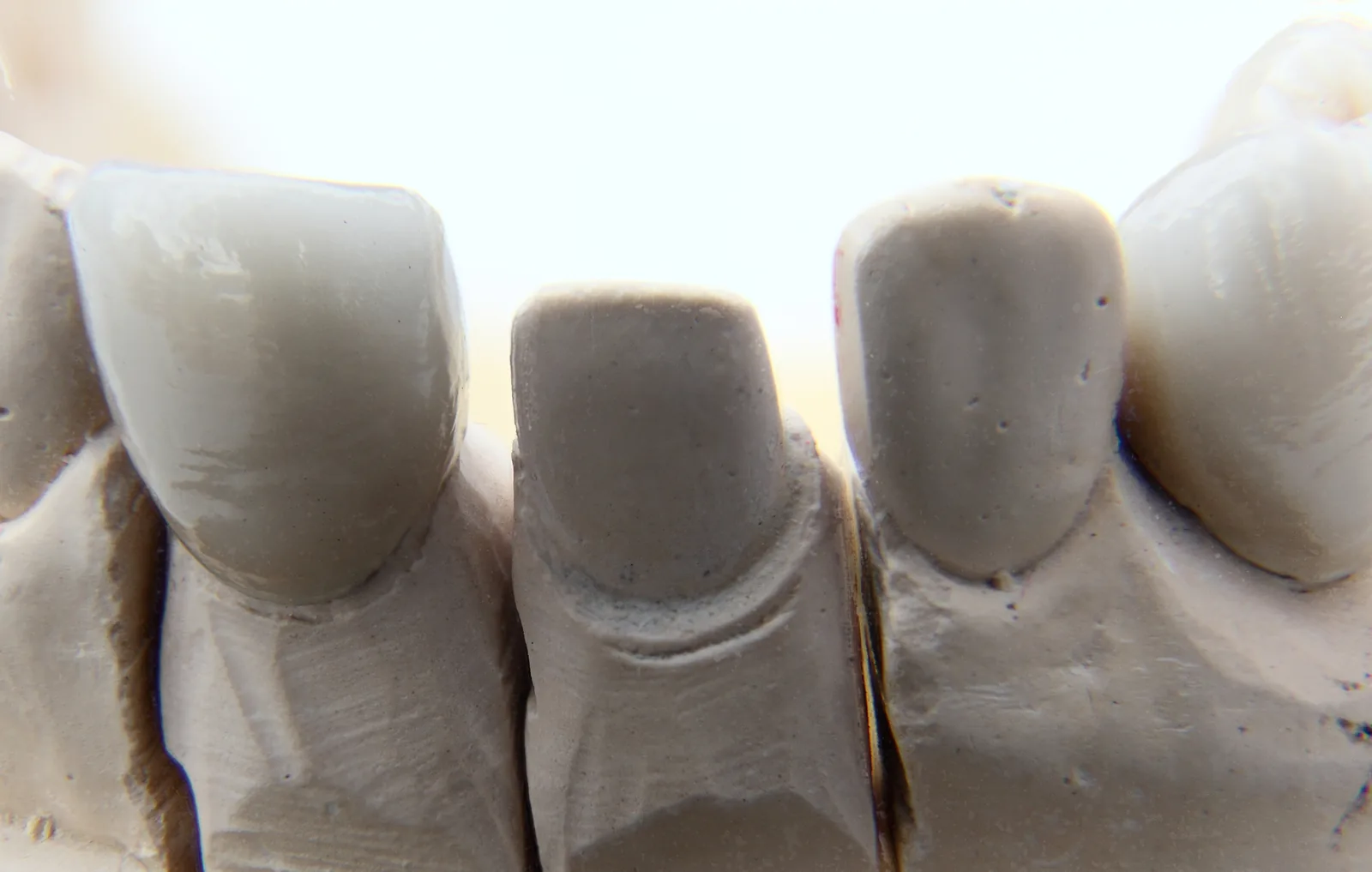
Image: Bin im Garten · BY-SA 3.0 · Source
Getting a crown? Here's exactly what happens at each visit, which material to choose, and honest answers about pain and how long it will last.
What Is a Dental Crown?
Think of a crown as a protective cover that fits over what remains of your natural tooth, similar in concept to a helmet protecting your head, except it's custom-shaped to match your specific tooth and bite. Unlike a filling, which fills in a portion of the tooth, a crown surrounds and covers the entire tooth structure above the gum, which is why it's used when there's too much damage for a filling to adequately handle.
When Would You Need a Dental Crown?
Crowns are commonly recommended after a root canal, since the procedure can leave a tooth more brittle and prone to fracture without the additional protection a crown provides. They're also used for teeth with large fractures or extensive decay that a standard filling can't adequately restore, to protect a weak tooth from cracking further, to hold together a tooth that's already cracked, to cover a severely discolored or misshapen tooth, and as the visible portion attached to a dental implant.
Types of Dental Crowns
Porcelain crowns closely mimic the look of natural teeth and are commonly used for visible front teeth where appearance matters most. Zirconia crowns, a strong ceramic material, offer a combination of durability and a natural appearance, making them popular for both front and back teeth. Gold crowns are highly durable and gentle on opposing teeth during chewing, though their metallic color makes them more commonly chosen for back teeth where appearance is less of a concern. PFM crowns (porcelain-fused-to-metal) combine a metal substructure for strength with a porcelain outer layer for a more natural appearance, offering a middle-ground option between full metal and full ceramic crowns.
The Dental Crown Procedure
### Before the Procedure
Your dentist examines the tooth, often with an X-ray, to confirm a crown is the right treatment and to check whether any underlying issues, like decay reaching the nerve, need to be addressed first, sometimes requiring a root canal before the crown itself can be placed.
### First Visit
The damaged or decayed portion of the tooth is removed, and the remaining tooth structure is reshaped to create room for the crown to fit properly. An impression or digital scan is taken and sent to a dental lab, where your custom crown is fabricated over the following one to two weeks. A temporary crown is placed in the meantime to protect the reshaped tooth and maintain your bite until the permanent crown is ready.
### Second Visit
Once your permanent crown arrives from the lab, the temporary is removed, and the dentist checks the fit, bite, and color match before permanently cementing the crown in place. Same-day crown technology exists at some practices, using an in-office scanner and milling machine to create and place a crown in a single visit, though this option isn't available everywhere and isn't suited to every case.
Benefits of Dental Crowns
Crowns restore both the strength and appearance of a significantly damaged tooth in a single, well-established procedure. They protect a weakened tooth from further damage or fracture, particularly important after a root canal. And modern crown materials are designed to closely match the appearance of natural teeth, meaning a well-made crown often blends in seamlessly with the rest of your smile.
Risks and Disadvantages
Preparing a tooth for a crown involves permanently removing a portion of the natural tooth structure, which is irreversible. There's a small risk the crown doesn't fit perfectly on the first attempt, requiring an adjustment or, in rare cases, a remake. Some patients experience temporary sensitivity after the procedure, and in a small number of cases, a tooth that had a crown placed without a prior root canal may later need one if the nerve becomes irritated or infected, though this isn't a common outcome with proper technique.
Recovery: What to Expect After Getting a Crown
Mild soreness and sensitivity, particularly to hot or cold, are common for a few days after the procedure and typically resolve on their own. Some sensitivity around the temporary crown between visits is also normal, since temporary crowns aren't designed to seal as precisely as the final permanent version.
### Foods to Avoid With a Crown
While your temporary crown is in place, it's worth avoiding sticky or very chewy foods that could pull it off, along with hard foods that could crack it. Once your permanent crown is placed and fully set, most normal foods are fine, though being mindful about extremely hard foods, like ice or hard candy, remains a good habit for protecting any crown long-term.
Are Dental Crowns Permanent?
Crowns are considered a long-term, permanent restoration in the sense that the natural tooth structure removed to make room for it doesn't grow back, meaning the tooth will need some form of crown or cap going forward. The crown itself, however, isn't permanent in the sense of lasting forever without ever needing replacement.
### How Long Do Crowns Last?
With good care, most crowns last somewhere in the range of ten to fifteen years, and many last considerably longer, sometimes decades, depending on the material, your oral hygiene, and habits like teeth grinding that can accelerate wear.
Caring for Your Dental Crown
A crowned tooth needs the same basic care as your natural teeth — regular brushing and flossing, with particular attention to cleaning thoroughly along the gumline where the crown meets your natural tooth, since this area is more prone to decay if not cleaned well. If you grind your teeth at night, a custom nightguard can meaningfully extend the life of a crown by reducing the repeated stress placed on it during sleep.
Is Getting a Dental Crown Painful?
The procedure is performed under local anesthesia, so significant pain during the appointment itself is uncommon. Most people describe the experience as similar to getting a large filling — some pressure and vibration from the reshaping process, but not sharp pain. Mild soreness for a few days afterward is normal and generally manageable with over-the-counter pain relief.
Veneers vs. Crowns: Which Option Is Right for You?
A veneer covers only the front surface of a tooth and is generally used for cosmetic concerns on a structurally healthy tooth. A crown covers the entire tooth and is used when there's more significant structural damage that needs full coverage for protection and strength, not just an appearance change. If your tooth is healthy but you want to change its color or shape, a veneer is typically the more conservative choice. If the tooth has significant decay, a large fracture, or has had a root canal, a crown is generally the more appropriate option.
Common Alternatives to a Crown
For less extensive damage, a large filling or an inlay or onlay might adequately restore the tooth without the more significant reshaping a crown requires. If the tooth is too damaged to save at all, extraction followed by an implant, bridge, or partial denture becomes the relevant alternative, addressing tooth replacement rather than tooth restoration.
When to Call Your Dentist
Contact your dentist if your crown feels loose, if you notice a gap or unevenness where the crown meets your gum, if you experience pain that's worsening rather than settling down, or if the crown chips or cracks. A loose crown, in particular, is worth addressing quickly, since bacteria can get underneath and affect the tooth structure beneath it.
Frequently Asked Questions About Dental Crowns
Can a crown fall off? It's possible, though uncommon with proper placement and care, and it's more likely to happen if the underlying cement has weakened over many years, if a very sticky or hard food dislodges it, or if decay has developed underneath the crown's edge. If a crown does come off, it's worth contacting your dentist promptly rather than trying to re-cement it yourself, since the underlying tooth needs to be evaluated.
Do I need a root canal before getting a crown? Not always. A crown is sometimes placed on a tooth with healthy, intact nerve tissue, simply to restore its shape and strength after significant decay or a fracture. A root canal is only needed first if the inner pulp of the tooth is already infected, inflamed, or otherwise compromised, which your dentist determines through examination and imaging.
How long can I wait between the first and second crown appointment? Most temporary crowns are designed to last a few weeks comfortably, which is generally enough time for the lab to fabricate your permanent crown. Waiting significantly longer than recommended increases the risk of the temporary loosening, breaking, or the tooth shifting slightly, which can affect how well the permanent crown ultimately fits.
Can a crowned tooth still get a cavity? Yes, decay can still develop at the edge where the crown meets the remaining natural tooth structure, or on other parts of the tooth not covered by the crown, if oral hygiene isn't kept up well. A crown protects the covered portion of the tooth but doesn't make the whole tooth immune to future decay.
Why does my crown feel different from my natural teeth? This is common initially, since a crown's shape and surface texture is similar to but not identical to your original tooth, and your bite needs a short adjustment period to get used to it. If it continues to feel noticeably off after a week or two, or feels like your bite doesn't line up correctly, it's worth having your dentist check and adjust the fit.